Luxury Contemporary
Luxury Contemporary virtual staging
At the top of a local market this is the only scheme in the set with the weight to justify an asking price. It is also the one competing most directly against a real stager, because above a certain number US sellers routinely pay for one.
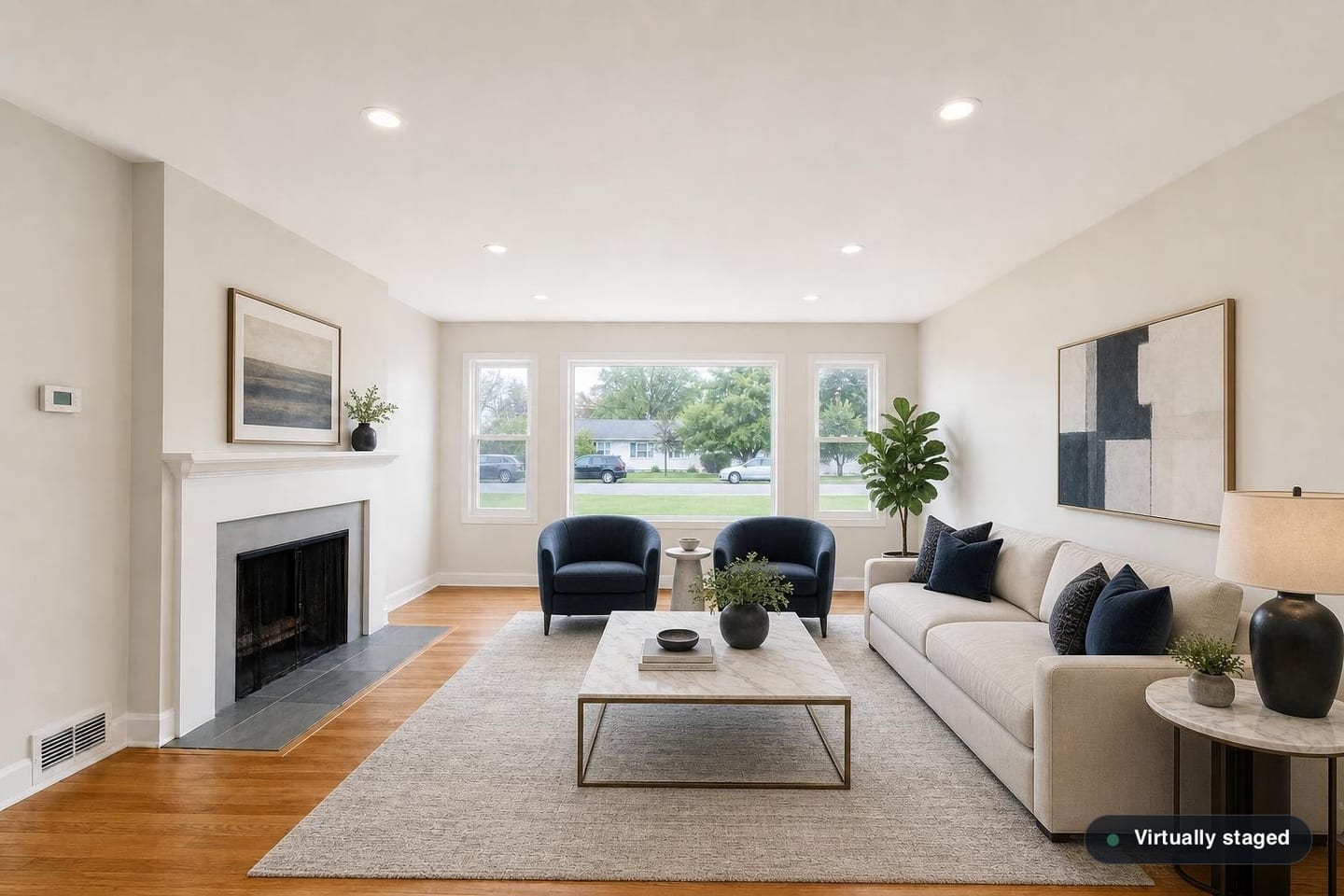
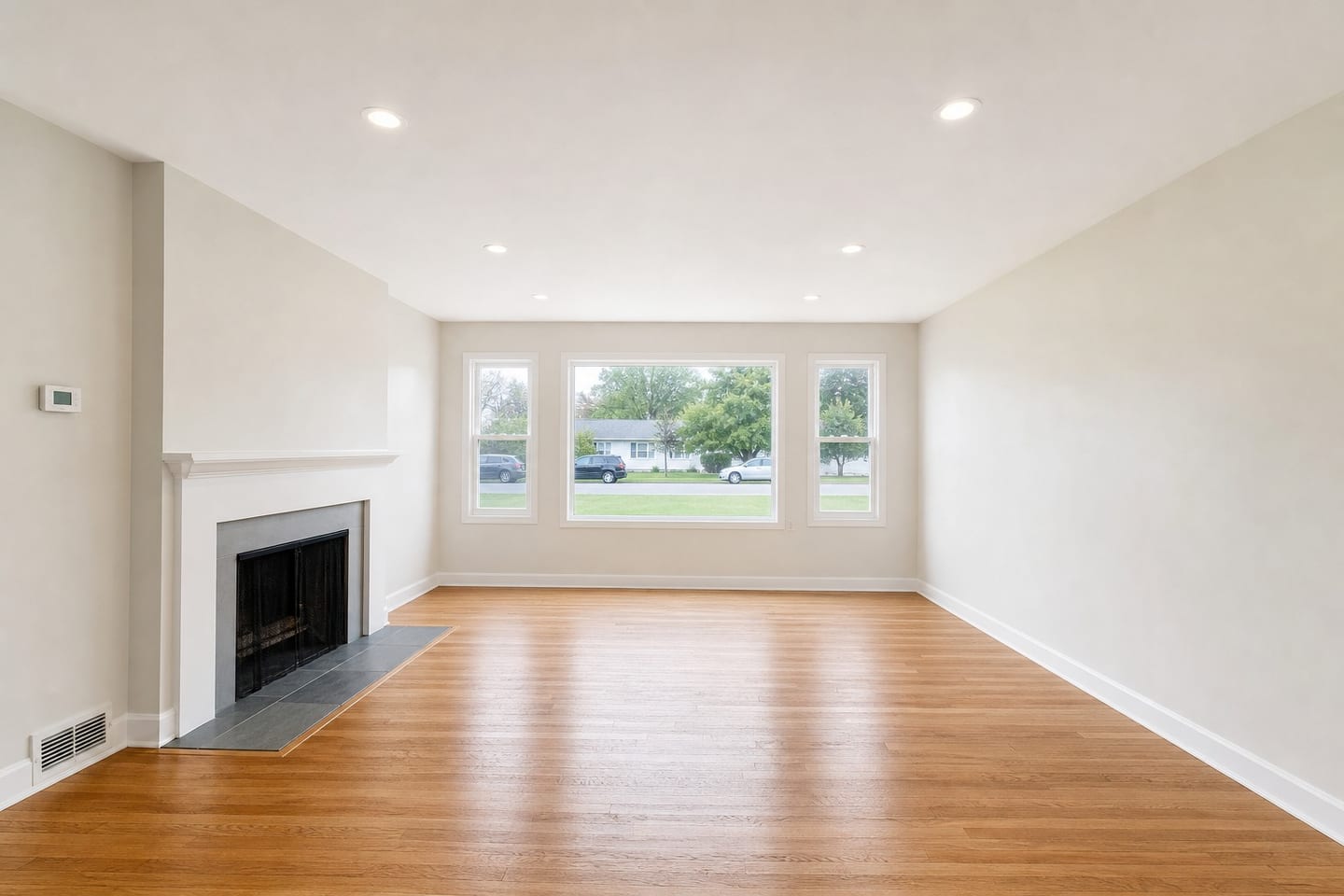 BeforeAfter
Weight, contrast, and one object that dominates
Deeper palettes, stone and marble surfaces, sculptural forms, generous upholstery, and a hierarchy in which one piece is unmistakably the subject of the photograph. The rest of this set is engineered to take up as little of a frame as possible; this one is engineered to fill it, and in a room with the proportions to allow that, filling it is what reads as expensive.
Volume is the precondition. A great room with a ten-foot ceiling or a two-story family room staged in light furniture photographs like a house nobody has moved into yet — the walls run past the top of the furniture and the frame never resolves. Substantial pieces are what close that gap.
The listings it fits
The top of a subdivision rather than the top of the country: new construction with a great room and a coffered or vaulted ceiling, high-rise condos with real glazing, and any house priced far enough above its local median that a buyer can feel the difference. It is also the answer for an owner's suite in a house at that level, where a light scheme would leave the best room in the listing looking like the least considered one.
It is worth being blunt about what it is competing with. In most US markets, a seller at this price is being advised to hire a stager, and the buyer scrolling your listing has three physically staged comps open in other tabs. A render in this scheme is the version of your photographs that stands up in that comparison; Scandinavian, on the same listing, does not.
Where it costs you
In an ordinary ranch living room or a mid-market condo the pieces are simply too big for the room. The photograph comes back with the furniture pressed against the frame edges, and the impression a buyer takes away is that the room is small — the opposite of the intention, and worse than not staging the photograph at all.
It is also the wrong register for a family house or a rental unit. A buyer with young children reads a stone table as something to be managed rather than something to want, and a rental listing dressed this way promises a standard the unit will not meet when somebody walks through it.
And it does not travel. A treatment that carries a listing in Scottsdale can look like it is trying too hard on an identically priced house in Pittsburgh, because the comparables a buyer is scrolling past are different houses. Judge it against the search results your listing actually appears in.
Where to spend it across a set
Two photographs, usually. The great room or main living space — the tallest, best-proportioned room in the house and almost always the lead interior shot — and the owner's suite. Those are the two frames a buyer at this level actually studies.
Running it through every room stops it working. A set in which fifteen photographs are all this emphatic stops reading as an expensive house and starts reading as a model home, and a model home is something a buyer discounts. The scheme needs to be the exception in the gallery to do anything at all.
One thing to watch, because this is the scheme that most tempts it: lighting. Floor lamps and table lamps stand on the floor and are entirely fair game. Anything attached to the structure is not — a pendant, a chandelier, a ceiling fan, an extra recessed can. Compare the ceiling in the render against the ceiling in your original before you publish, because that is where this scheme fails when it fails.
Luxury Contemporary questions
- What kind of room is tall enough for it?
- There is no number, but the test is whether the room feels tall standing in it — nine or ten feet, a vault, a two-story space. In a 1960s ranch with an eight-foot ceiling, something lighter photographs better every time.
- Can it add a chandelier or more recessed lighting?
- No. Anything fixed to the ceiling belongs to the house and stays exactly as you shot it. What this scheme contributes is free-standing — the floor lamp and the table lamp in the example above are the whole of it.
- Does this stand up against a physically staged competitor?
- On the photographs, yes, which is what the buyer sees first. What it cannot do is furnish the house for the open house, so on a listing where showings do most of the work, weigh that separately.
- Is it dishonest to make a house look this expensive?
- The furniture is a proposal and it is labeled as staged, so the exposure is commercial rather than anything else: dress a house beyond what it can deliver and the showing disappoints. Fit the scheme to the building.
Try it on your best room
One free render, best spent on the tallest room in the listing.
Stage a room freeGeneral guidance about how furnishing schemes photograph in US housing stock, and about how the software behaves. Not legal advice, and not a statement of what your state commission, your MLS or your broker requires of a listing image — confirm those before a staged photo is published.