Edinburgh
Virtual home staging for Edinburgh listings
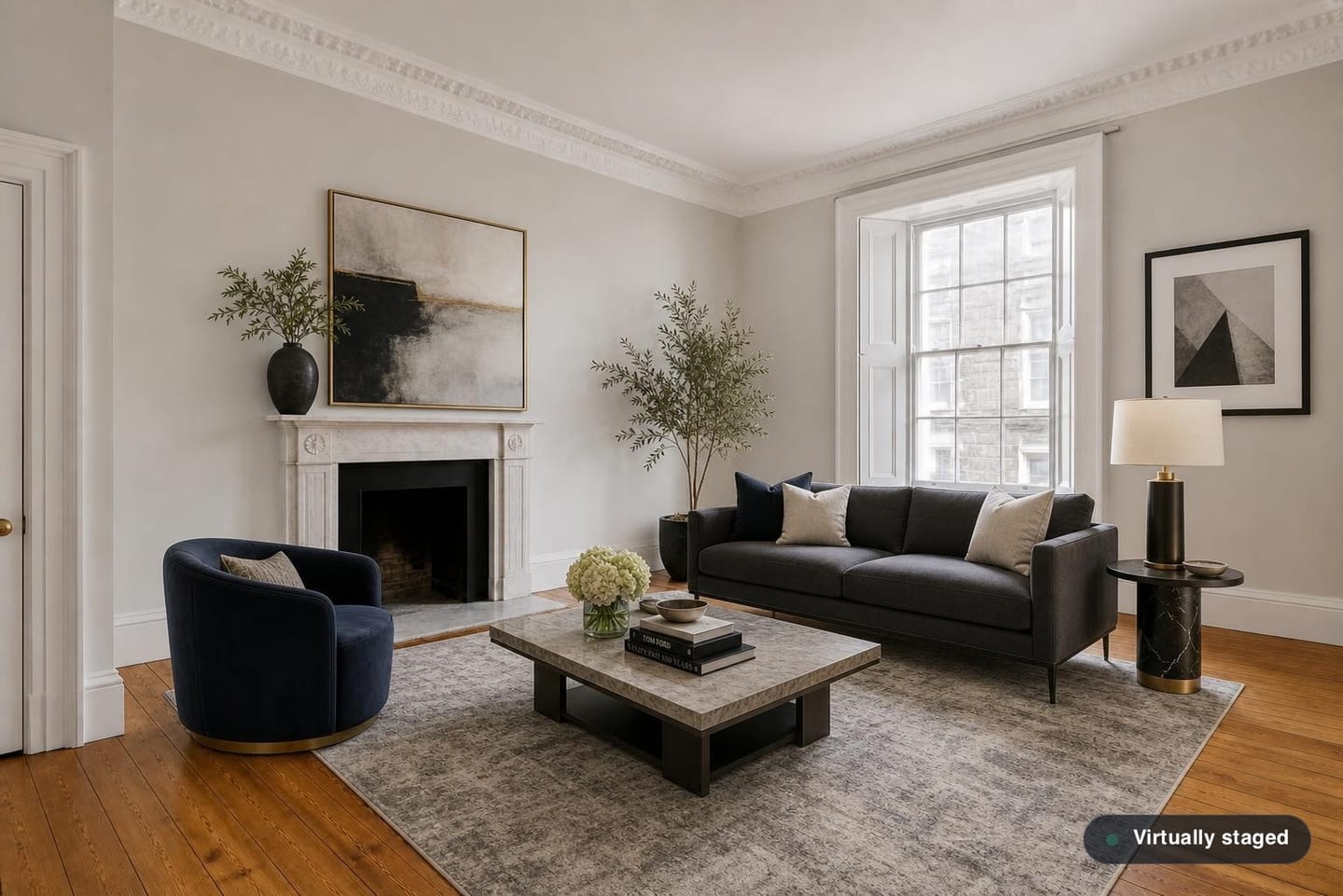
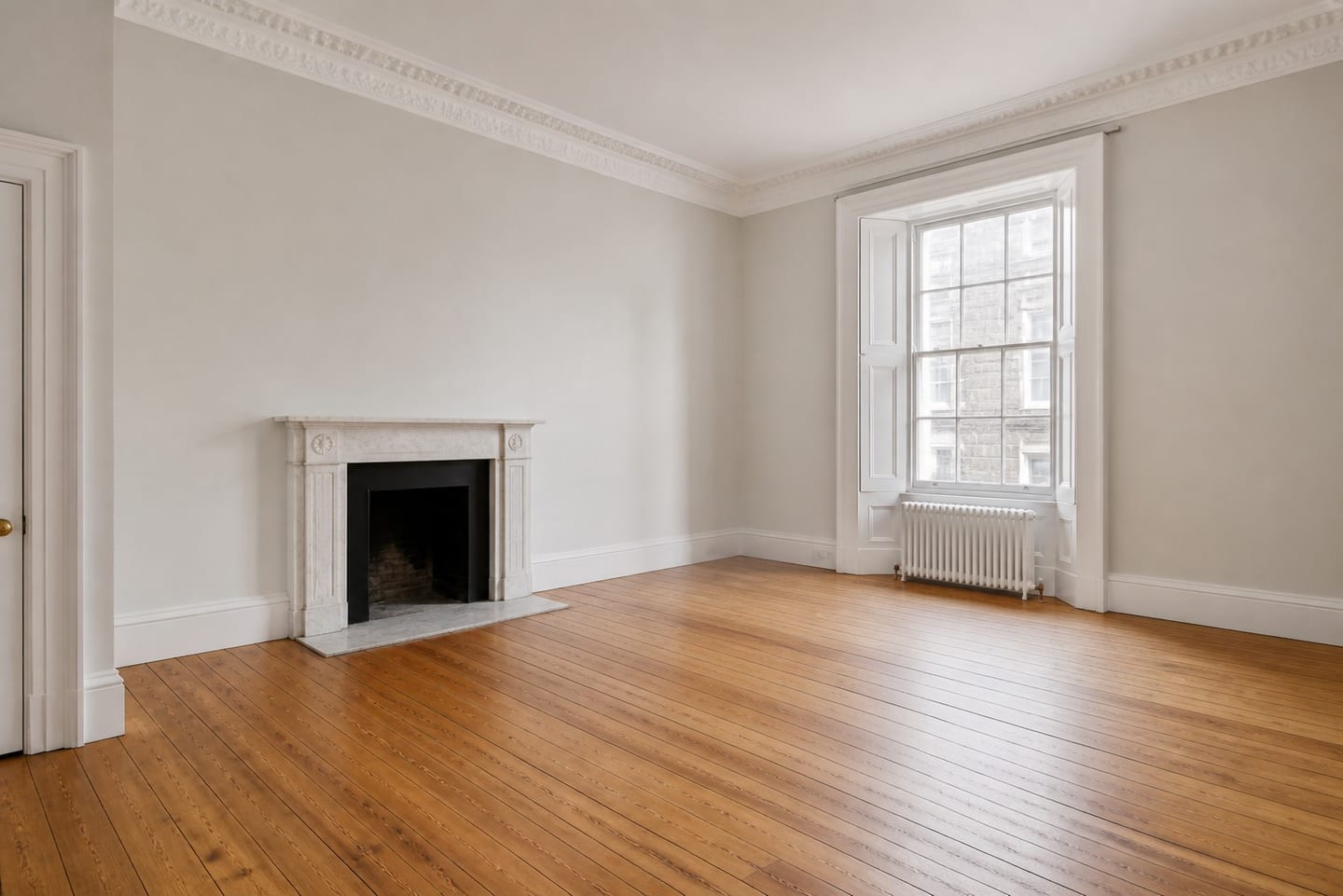
Edinburgh's housing stock is unusually varied for a city its size, and the rooms that photograph worst empty are the ones the city has most of: tall Georgian reception rooms, tenement box rooms, and new-build flats with nothing in them to judge scale against.
 BeforeAfter
New Town and Georgian flats: furniture has to respect the room
A New Town drawing room is defined by its proportions — ceiling height, window scale, cornicing, shutters, often a marble chimneypiece. Photographed empty it reads as impressive but abstract; a buyer can see it's grand without being able to picture living in it.
The staging risk here is the opposite of the usual one. Furniture that's too small makes a beautiful room look like a waiting area, and furniture that's too contemporary fights the plasterwork. Classic Traditional and Luxury Contemporary tend to sit better in these rooms than the lighter Scandinavian look that works so well elsewhere in the city.
What must not change: the cornice, the shutters, the fireplace, the window glazing and the view out of it. Those are property features, and altering them in a marketing photograph is not a styling choice.
Tenement flats: the box room is the whole problem
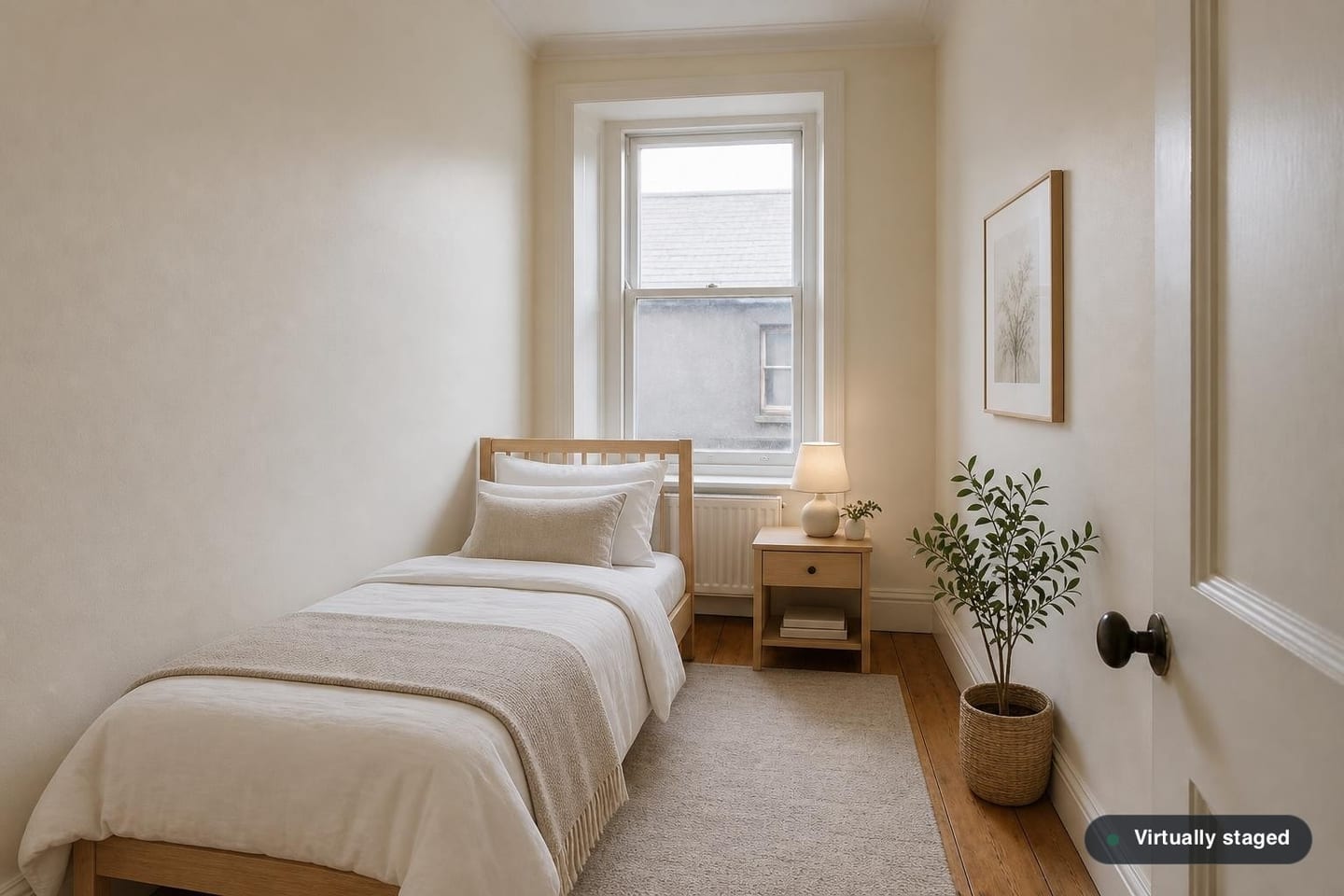
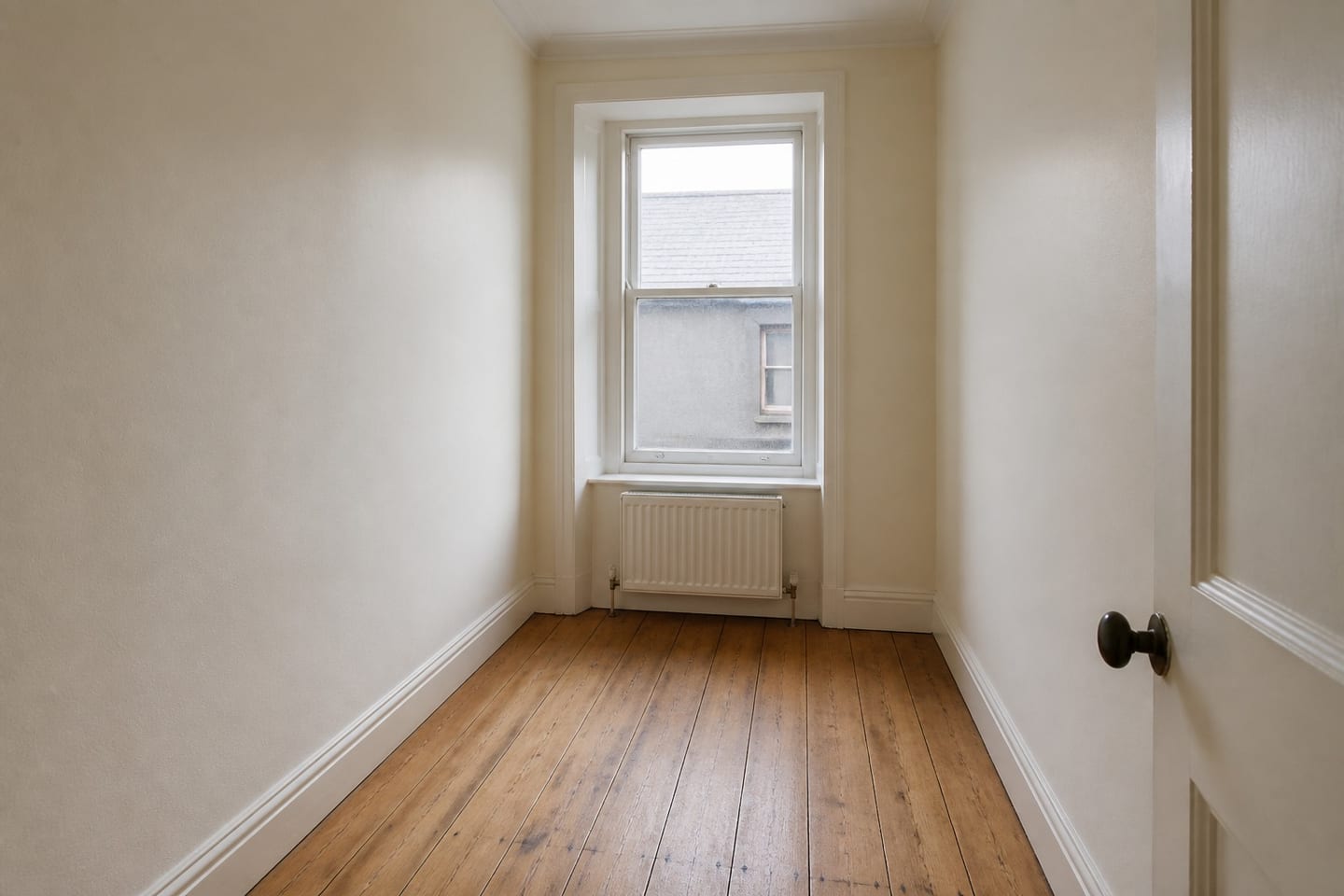
Across Marchmont, Bruntsfield, Morningside, Leith and Gorgie, the recurring listing is a tenement flat with generous main rooms and one small third room that the listing has to justify. Empty, a box room is unreadable — the buyer genuinely cannot tell whether it's a bedroom, a study or a cupboard with ambitions.
It can be a high-value photo to stage because it helps a buyer understand one plausible use for an awkward room. It must not be used to invent a bedroom count: the marketed room description and measurements still come from the particulars, and the agent should check any staged furniture against them.
Bay windows in the main rooms are the other Edinburgh signature. They're a strong feature and easy to under-use: staging that arranges seating to the bay rather than ignoring it makes the room read the way it feels in person.
 BeforeAfter
Leith, Granton and the waterfront new-builds
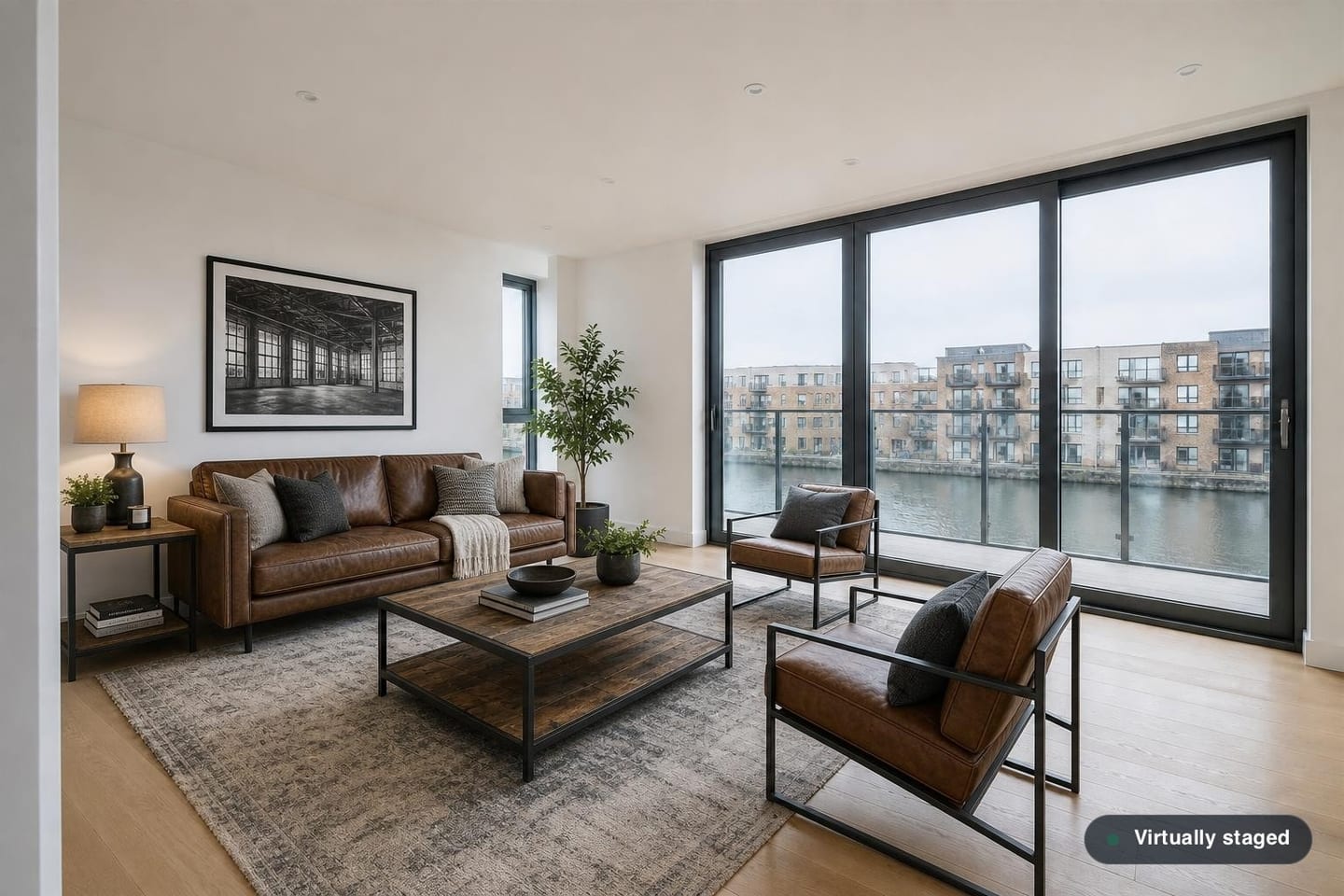
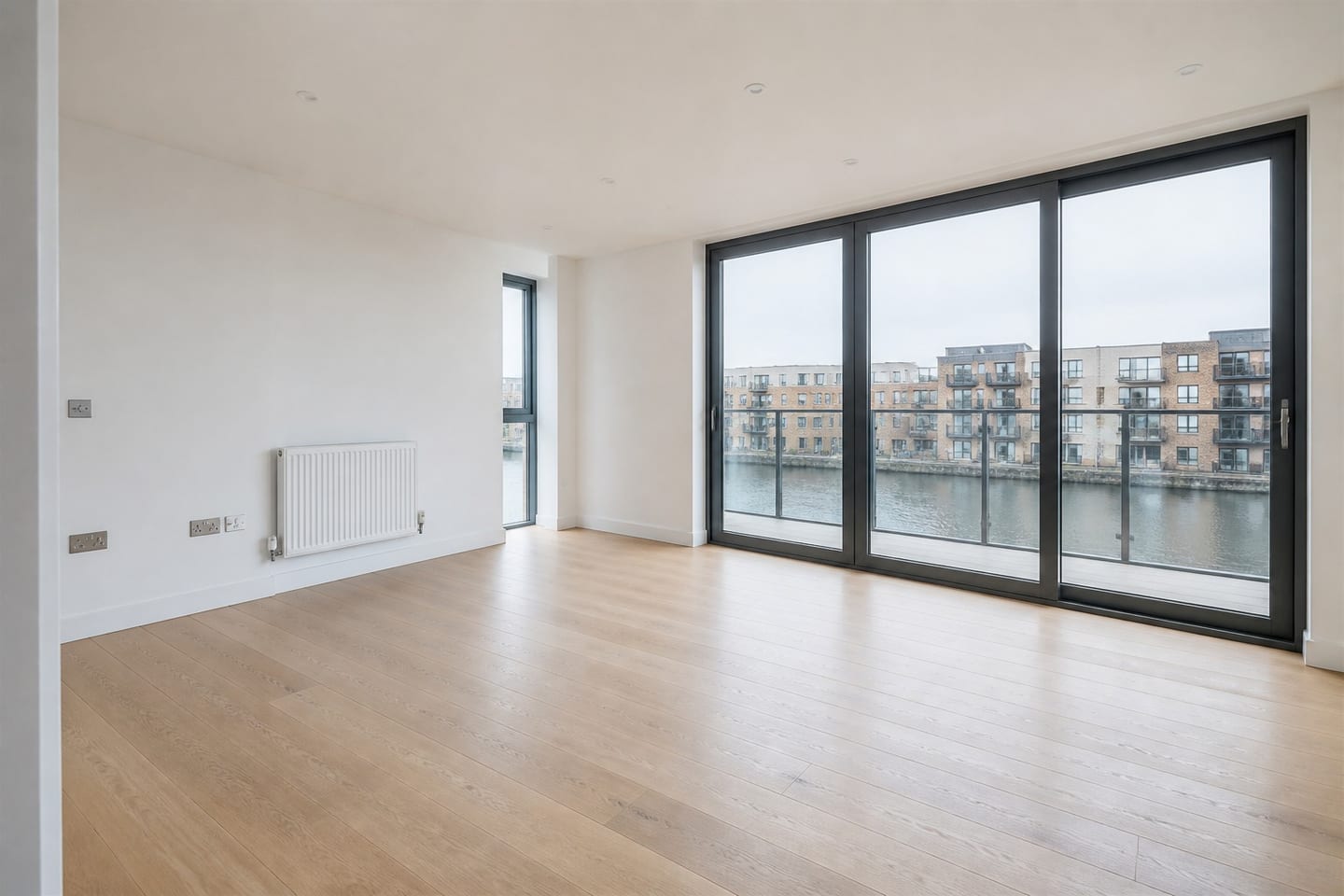
Newer waterfront and converted-warehouse stock has the reverse problem to the New Town: clean, well-lit rooms with no period detail to anchor the eye, which photograph as pleasant and forgettable. Industrial Loft and Mid-Century staging give these rooms a point of view, and the scale reference does the practical work.
Conversions in particular tend to have irregular room shapes and structural quirks — a column, an odd alcove, a sloped ceiling — that furniture has to work around rather than hide. Those are the features to check against your original before publishing: the before/after pair is delivered together precisely so that comparison takes seconds.
 BeforeAfter
Short lets, HMOs and the Festival market
Edinburgh's student, HMO and Festival demand gives parts of the rental market a distinctive rhythm, while short-term lets are also subject to Scotland's licensing regime and local planning controls. Properties marketed between tenancies are often photographed on a short turnaround, which makes furniture delivery and a second shoot difficult.
The economics are different from a high-value owner-occupied sale too: many rental instructions will not support a physical staging budget, even when an empty room is hard to read in a listing.
It has to fit the Home Report window
Like elsewhere in Scotland, most Edinburgh homes need a Home Report before they are marketed, subject to limited exceptions. That puts photography, the report and the listing into one compressed sequence, while an offers-over sale that proceeds to a closing date gives the initial launch particular weight.
Because staging works on the photographs rather than the property, the photographer visits once and there is no furniture delivery or second shoot to schedule.
Questions Edinburgh agents ask
- Will it alter the cornicing, shutters or fireplace?
- They must not be altered — the furniture-only prompt exists to protect exactly these features. It is not a guarantee, though: compare the render with your original and reject it if the cornice, shutters, fireplace, glazing or view changed. Period detail is where drift is most obvious and most costly, so it is worth the ten seconds.
- Can it make a box room look bigger than it is?
- It must not. The room geometry in the photograph is kept, but generated furniture is still an illustration rather than a measurement. Check the result against the floor plan and stated dimensions before publishing, especially where the room's use or bedroom classification matters.
- Which style suits a New Town flat?
- Classic Traditional and Luxury Contemporary generally sit best with period proportions and plasterwork; Scandinavian and Japandi work better in tenement flats and smaller rooms where light is the constraint. You choose per photo, and you can change the style and re-render if it doesn't land.
- Does it work for HMO and short-let listings?
- It can be used on empty rental stock between tenancies, subject to the same furniture-only review and clear disclosure as a sale listing. Staging does not change any licensing, planning, occupancy or room-classification requirement that applies to an HMO or short-term let.
- What do you need from me?
- One JPEG or PNG per room, ideally at the resolution your photographer supplied. The output matches your original aspect ratio up to 2048px on the long edge, so nothing is reframed or cropped for the portal.
Stage a room from your next Edinburgh listing
One empty-room photo, one style, no card required. We'll email when it is ready.
Stage a room freeThis page describes how the product works and the local housing stock it's used on. It isn't legal advice — for certainty about your own listings, ask your compliance lead or solicitor.