For listing agents
Virtual staging for listing agents
The constraint on a vacant listing is almost never whether staged photographs would help. It is that the window between the photographer leaving and the listing going live is a few days, and nothing involving a delivery truck fits inside it.
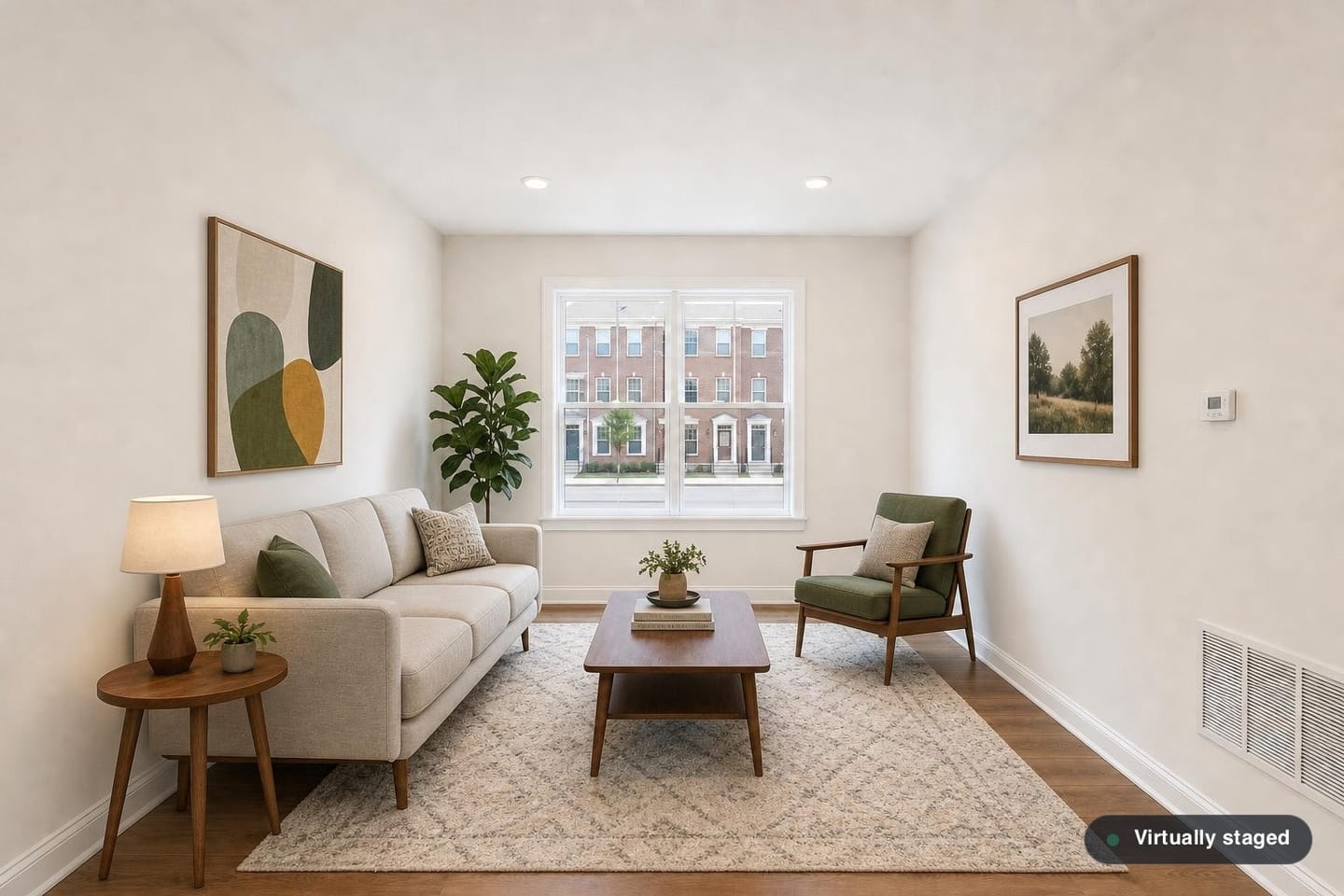
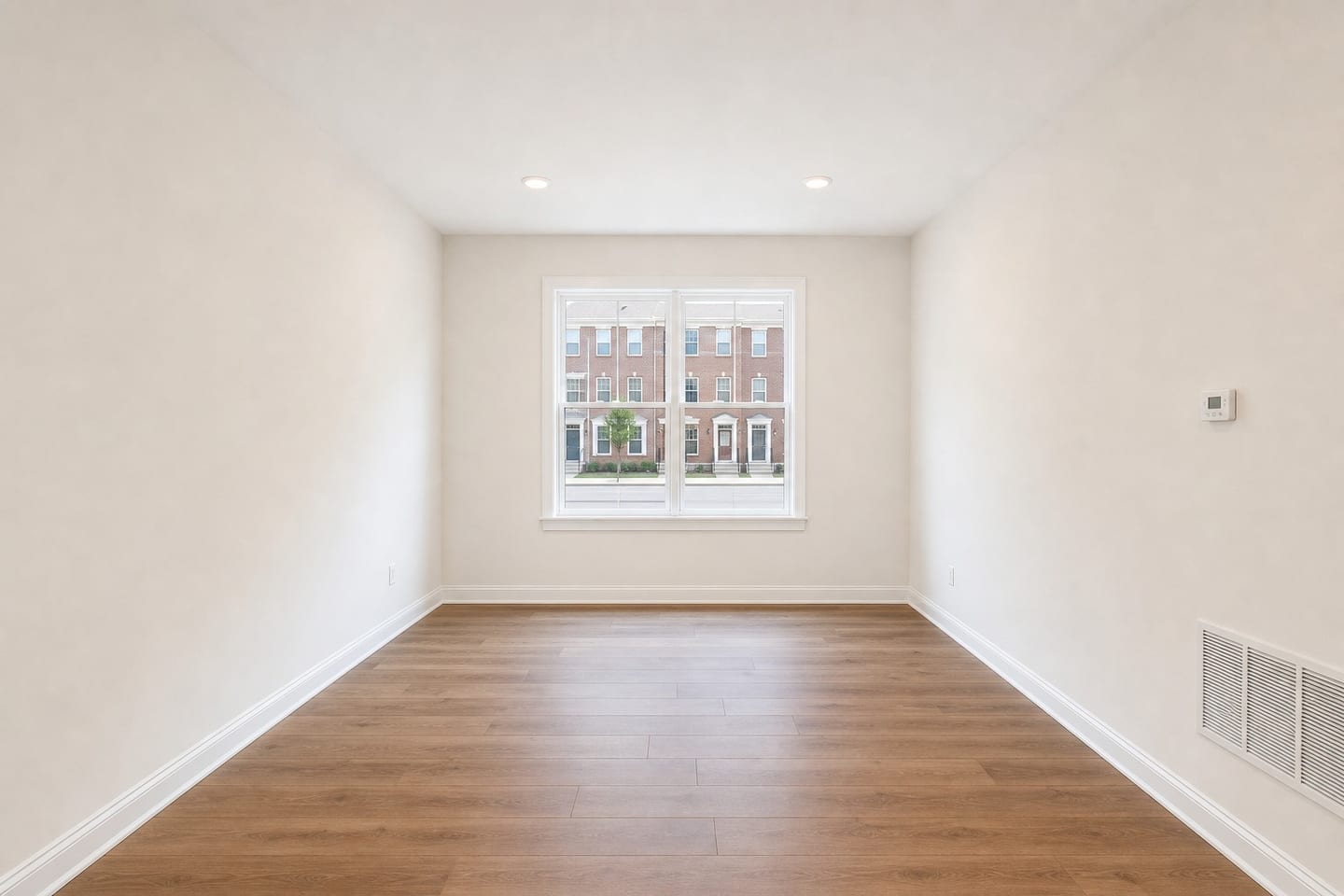 BeforeAfter
Where it fits between the listing appointment and going live
The sequence on a vacant property is familiar: listing appointment, agreement signed, photographer scheduled, photos back within a day or two, copy written, MLS input, syndication. Anything that has to happen to the house itself competes with that timeline, and usually loses.
Virtual staging happens after the photographer leaves, from the files they already delivered. Nobody visits twice, nothing is scheduled with a seller who may already have relocated, and the images come back into the same window the listing copy is being written in.
It also survives a coming-soon period well. If you are holding a property before it goes active, having the staged set finished means the launch does not depend on anything arriving.
Doing the whole set, not the three best rooms
Per-photo pricing quietly pushes agents toward staging the living room, the primary bedroom and maybe the kitchen, and leaving the rest of the set empty. Buyers read that: a set where the first three photos are furnished and the remaining nine are bare rooms looks like something is being managed rather than shown.
The rooms that get skipped are usually the ones a buyer cannot interpret without help — a bonus room over the garage that could be a fourth bedroom or an office, a finished basement, a long narrow dining space, a bedroom that is genuinely small enough that the question is whether a queen fits.
Each photo here gets its own room type and furnishing style rather than one look applied across the property, which matters because a primary suite and a galley kitchen do not want the same answer. And because re-rolls are free, a room that comes back wrong is fixed rather than dropped from the set.
What it will not do, and why that is the point
It renders free-standing furniture and decor. It does not repaint, resurface, refinish, remove a soffit, open a wall, replace a window view or make a room bigger — and it is built so that it cannot, rather than being asked politely not to.
That constraint is what makes the photographs usable. An image that improved the house is an image you have to defend at the showing, in the inspection conversation, and potentially to your broker. An image that added a sofa is an image you disclose and move on from.
Which puts one job on you: open the render beside the original at full size before it goes into the MLS. Nothing automated is checking every image, models occasionally drift, and thirty seconds of comparison per photo is the control that works. Re-rolls are free precisely so that using it is never the expensive option.
Disclosure is handled before it reaches you
Every served image carries a small corner badge composited into the picture, and every gallery ships a plain disclosure line for the remarks field. You also get the clean file, so a placement that carries disclosure some other way is still available to you.
The reason the badge is in the image rather than optional is the one thing agents underestimate: photographs get syndicated, forwarded, screenshotted and printed, and a disclosure typed into a remarks field does not travel with any of that.
Your unaltered original is kept alongside every render and downloadable from the gallery, which is what you want on file — and, in at least one state, what an advertisement has to be able to point at.
Working as a team or a brokerage rather than solo
The Office plan carries three seats and twenty-five listings a month, which is sized for a small team or an office rather than an individual producer. Seats matter more than volume for most teams: the listing coordinator uploading photos should not be doing it from the rainmaker's login.
Office also unlocks a white-label gallery link — a shareable before/after page with our branding removed, which is a reasonable thing to send a seller or attach to a listing presentation. The compliance badge and the disclosure note stay on it, because those are not branding.
For a solo agent listing a vacant property occasionally, the per-listing purchase is usually the right shape, and switching later costs nothing.
Questions from agents
- Do I need to tell the seller the photos are virtually staged?
- Tell them, and tell them at the listing appointment rather than when the photos come back. Sellers are rarely against it; what they object to is finding out afterwards. It is also a much easier conversation while you are explaining how the property will be marketed than after the images are already live.
- Will my photographer be annoyed?
- Usually the opposite — it works off their files, credits nothing away from them, and does not ask them to reshoot. Ask them to deliver the unedited originals alongside their edits, which you want on file anyway.
- How many photos in a set should be staged?
- Every room a buyer would struggle to read empty, which is most of them in a vacant property. What creates suspicion is a set that is half furnished and half bare with no obvious logic to which is which.
- What if a render comes back wrong?
- Re-roll it. It is free, it does not count against quota, and you can change the furnishing style at the same time. If it comes back wrong the same way twice, that is worth telling us about — a repeated failure is usually a fixable problem on our side rather than bad luck.
- Can the whole team use one account?
- The Office plan has three seats. Below that, one login is one login — we would rather you know that before a coordinator and two agents are sharing a password.
- Can I try it before putting a listing through it?
- One room, free, no card. Use a photo from a vacant listing you have already shot, so what you are judging is your own property rather than a demo.
Put one of your own vacant rooms through it
One photo, one style, free. You will know inside a few minutes whether the output is usable on a listing.
Stage a room freeGeneral information about how the product fits an agent's workflow, not legal advice and not a statement of what your state commission, your MLS or your broker requires. Confirm advertising and disclosure requirements with your own broker before publishing staged images.