United States
Virtual staging for US listings
Upload a photo of an empty room and get it back furnished, rendered under a furniture-only instruction and delivered next to your untouched original. Built for listing agents who have to answer for what the photo shows.
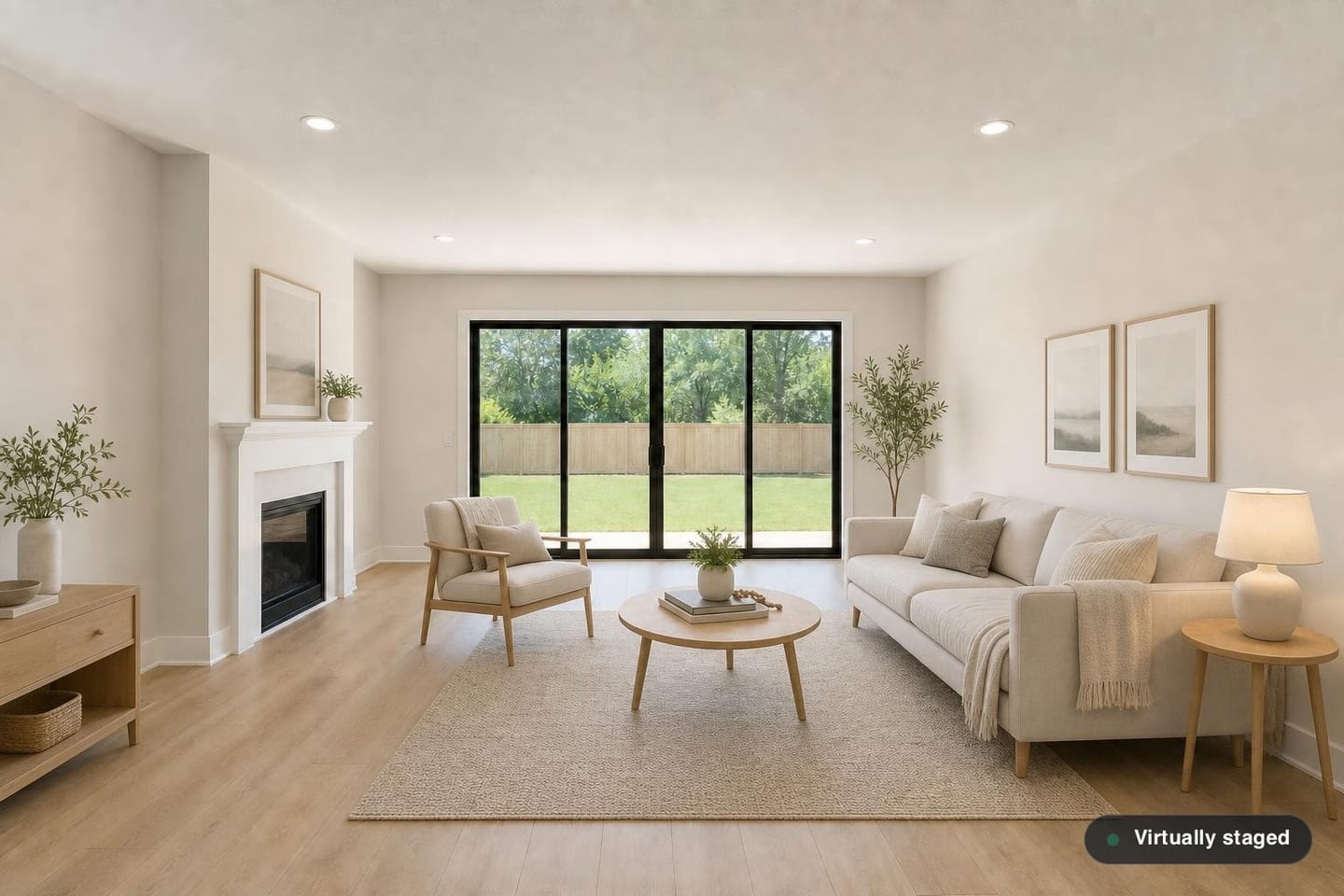
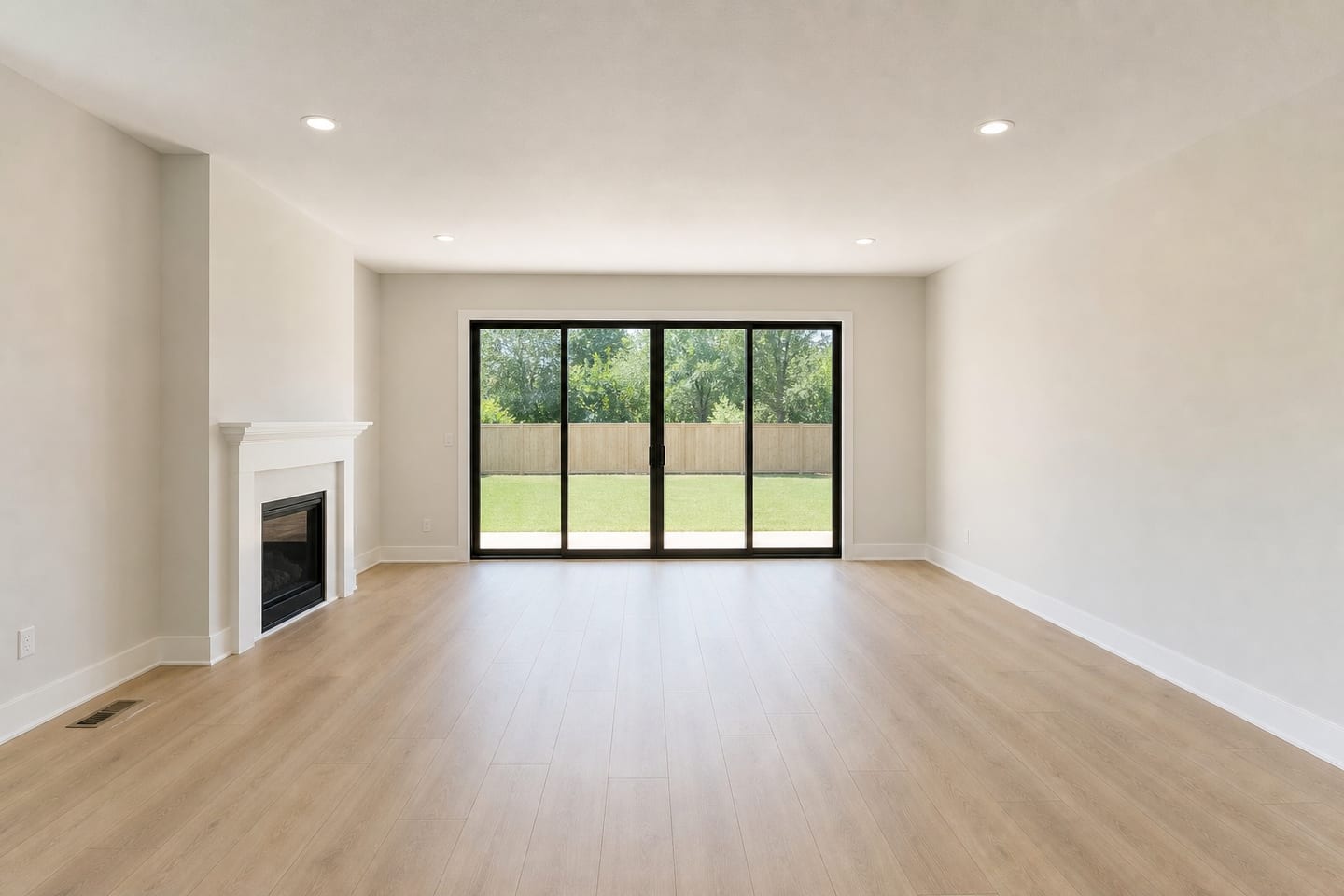 BeforeAfter
A vacant room gives a buyer nothing to measure against
Buyers do not read square footage; they read photographs. A 12 × 14 bedroom and a 10 × 11 bedroom look nearly identical when both are empty, and the listing that cannot show a queen bed with nightstands on both sides is the listing that gets swiped past on a phone. Furniture is the scale reference, and vacant listings do not have any.
That matters more in a syndicated market than it would anywhere else. Your photos leave the MLS and land on Zillow, Redfin and Realtor.com inside a scrolling grid, next to occupied homes that were shot dressed. The comparison is made in about a second, and it is made on the thumbnail.
Vacancy is not an edge case either. New construction, relocations, estate sales, flips awaiting a buyer and rentals between tenants are all routinely marketed empty — and all of them are on a clock where a furniture rental and a second shoot do not fit.
Furniture only, because the alternative is a misrepresentation
Every render is produced under an instruction that permits free-standing furniture and decor and nothing else. It comes back at your original's framing and aspect ratio, and your original is kept beside it. That pairing is the point: putting the two side by side and checking walls, windows, flooring, cabinetry, fixtures, built-ins and the view out of the window takes a few seconds, and re-rolling a render that drifted costs nothing.
Be clear-eyed about where the responsibility sits. Image models are not deterministic, there is no automated check inspecting every render today, and the agent's look at the pair before it goes to the MLS is the control that actually works.
What separates presentation from misrepresentation is not whether you added something — it is whether you changed the house. A sofa in an empty family room is presentation. A kitchen island that does not exist, a repainted wall, a patched water stain or a swapped-out view is a claim about the property that the property cannot support.
The disclosure travels with the file
Every image is served with a small corner badge composited into the picture itself, and every gallery ships a one-line disclosure note ready to paste into the remarks. Both come from one place in the codebase, so the wording cannot drift between the image, the download, the ZIP and the email.
Badging the file rather than the listing page is a deliberate choice. A disclosure typed into a remarks field stays in the remarks field; the photo gets syndicated, screenshotted, texted to a buyer and pinned to a flyer without it. The badge goes wherever the photo goes.
Your unaltered original is retained alongside the render and can be produced at any point, which is the other half of the same idea: the honest answer to "what did this room actually look like" should be a file, not a recollection.
It has to fit the way a listing actually gets built
Staging happens from the photographer's existing files, so nobody visits twice. There is no delivery window, no rental period and no pickup to coordinate against a seller who has already moved out of state.
Each photo gets its own room type and furnishing style, which matters because US listing sets are not eight versions of the same room. A primary suite, a finished basement, a bonus room over the garage and a galley kitchen want different answers, and picking one style for the whole property is how a set starts looking synthetic.
Output preserves your original's aspect ratio up to 2048px on the long edge. That is not a technical footnote — MLS and portal thumbnails crop hard, and a render that quietly changed shape is a render that crops differently from every other photo in the set.
What it costs next to the alternatives
One listing of up to ten photos is $19. On the Office plan the cost works out around $0.52 per staged photo, and re-rolls never count against a quota, so a room that lands badly costs nothing to redo.
Prices are quoted and charged in USD. The number on this page is the number on the statement — there is no conversion applied in between, and no tax added at checkout.
The comparison worth running is not always virtual against physical staging. For a vacant rental turn or an estate sale on a short timeline it is more often virtual staging against listing the room empty, which is a different question with a much easier answer.
Questions US agents ask
- Can I use virtually staged photos on the MLS?
- Virtual staging is a normal part of US listing marketing, and the question is almost never whether you may — it is how the image must be disclosed and what it is allowed to change. Rules come from several directions at once: your state's real estate commission, your local MLS's own photo policy, NAR's Code of Ethics if you are a member, and federal law on deceptive advertising. Check your MLS's published rules for your board, because they are set board by board.
- Will it change anything about the house itself?
- It is built not to. The instruction permits free-standing furniture and decor only, output is locked to your original's aspect ratio, and the original is delivered next to the render so a difference is easy to see. Models still drift occasionally and nothing automated is catching it, so compare the pair before you upload and re-roll — free — anything that altered the property.
- Does the badge have to be on the photo?
- We composite it into every served image rather than making it optional, because a disclosure that lives only in the listing remarks does not survive syndication, a screenshot or a printed flyer. You also get the clean file and a text disclosure line, so you can meet whatever your MLS and state require on top of the badge.
- What resolution do the images come back at?
- The same aspect ratio as your original, up to 2048px on the long edge at high quality. We do not reframe or re-crop, because a photo that changed shape crops differently from the rest of your set on every portal that touches it.
- Can I stage an occupied home?
- This stages empty or nearly empty rooms rather than removing a seller's furniture from an occupied one. Decluttering an occupied room is a different operation with a different risk profile, and it is not what this tool does.
- Is there a way to try it before paying?
- One room, staged in full, no credit card. Use a photo from a listing you already have so you are judging the output on your own property rather than on a sample somebody picked because it worked.
Stage a room from your next vacant listing
One photo, one style, free, no card and no trial to cancel. We email you when it is ready.
Stage a room freeThis page describes how the product is built and the rules it is designed around. It is general information, not legal advice, and it is not a substitute for your broker's guidance, your state commission's rules or your MLS's published policy.