Comparison
Virtual staging vs home staging
Home staging is a mature profession in the US with an established playbook, and virtual staging is not a cheaper version of it. They act on different things, at different points, for different sellers — and a fair comparison starts by saying so.
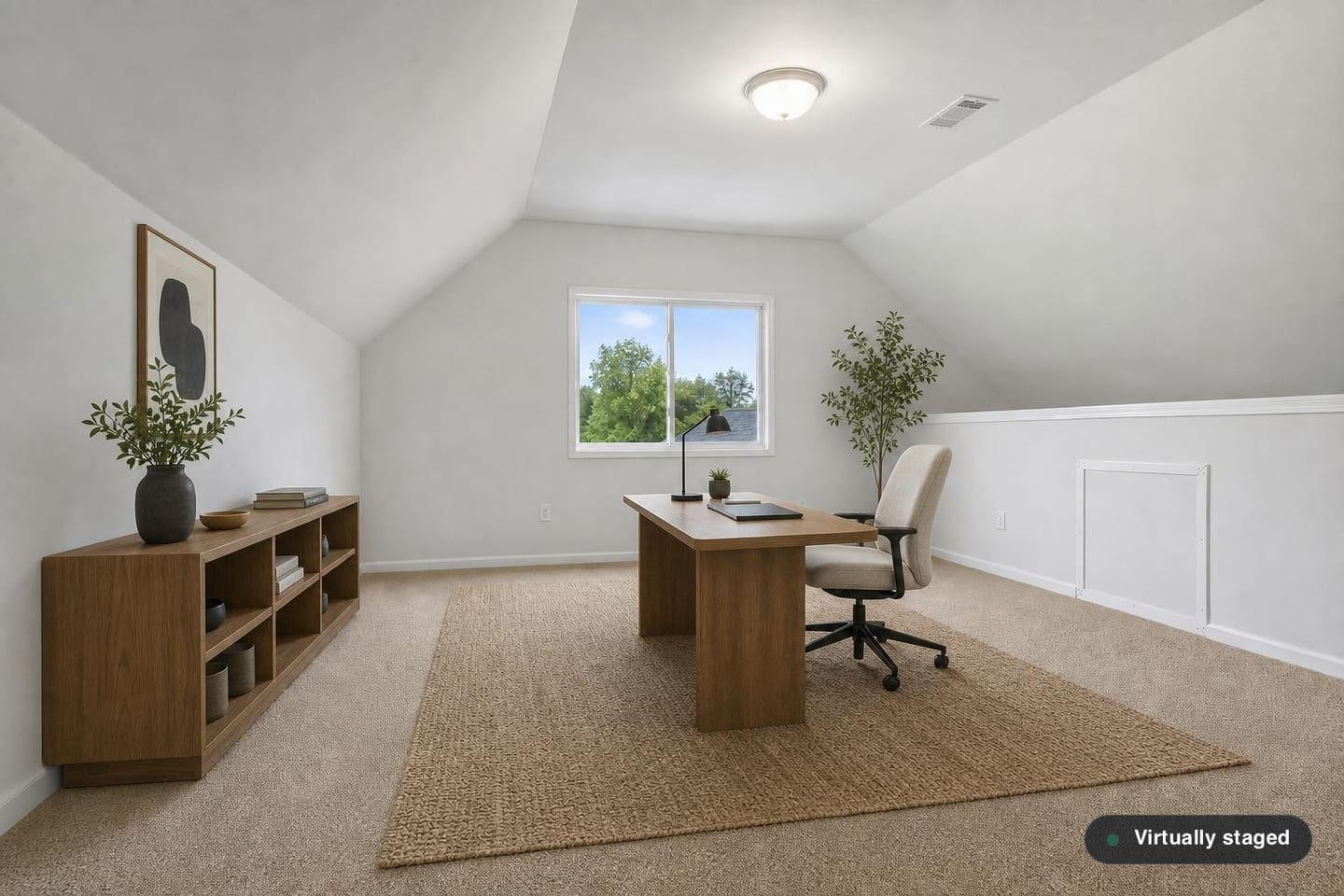
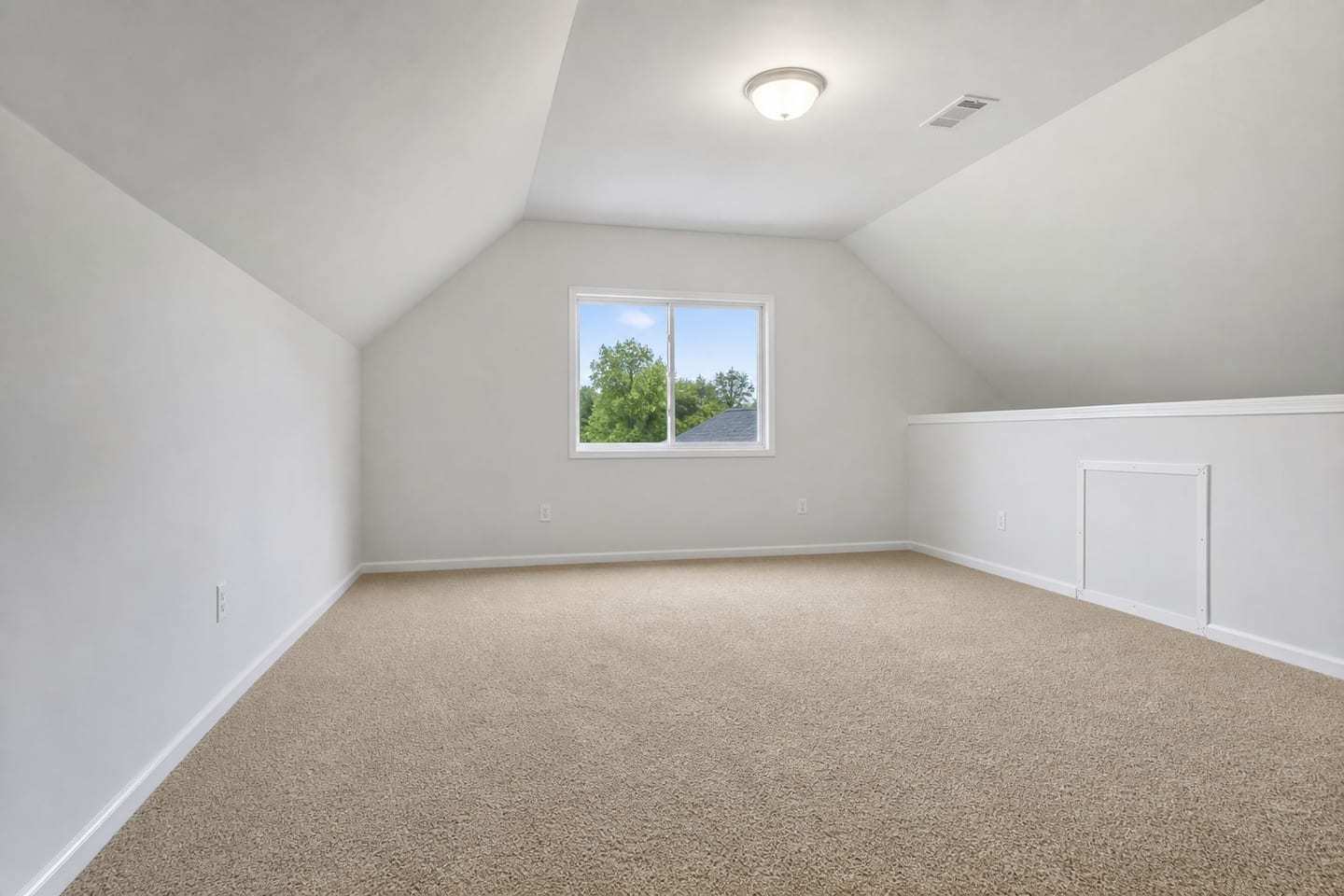 BeforeAfter
One changes the house, the other changes the photographs
A home stager works on the property. They edit what is already there, bring in inventory, deal with the furniture the seller could not part with, tell you the sectional is too big for the family room, and produce a house that shows well in person, smells right, and photographs well as a side effect.
Virtual staging works on files that already exist. It furnishes the photographs and does not touch the property, which means everything that happens after a buyer parks outside is unchanged. That is the honest boundary, and any vendor blurring it is setting you up for the walkthrough.
The two are not alternatives in the way the search results imply. On an occupied listing where the seller's furniture is the problem, a stager's consultation is doing work virtual staging cannot begin to do. On a vacant listing three states away from the seller, virtual staging is doing work a stager can only do by trucking in inventory.
Where a home stager is the right call
When the property will be shown a lot. Open houses, broker tours and back-to-back showings all put buyers inside the rooms, and photographs stop being the primary experience the moment someone walks in.
When the issue is the seller's own furnishings. Scale, volume and layout problems in an occupied home are a consultation, not a rendering job — and much of a stager's value there is being the third party who can say what the listing agent would rather not.
At the top of a price band. Above the point where buyers expect a dressed house and are comparing against new-construction model homes, an empty room reads as a problem regardless of how the listing photographs looked.
When you need the house to feel right rather than look right. Traffic flow, where a buyer's eye lands walking in, what the primary suite feels like at the door — none of that is in a photograph, and none of it is something a render can deliver.
Where virtual staging is the only thing that fits
Vacant inventory on a clock. Relocation listings, estate sales, flips carrying a note, and rental turns between tenants all list empty, and all of them are running against a timeline that does not accommodate a delivery window and a two-month minimum rental.
Properties where furniture physically cannot go in. A fourth-floor walk-up, a condo with a freight-elevator reservation policy, an HOA with delivery restrictions, a property mid-renovation, or one an hour past where any stager's inventory travels.
Sets nobody would pay to dress. Bonus rooms over the garage, finished basements, the fourth bedroom currently serving as nothing — the rooms a physical stage would skip on budget grounds are exactly the ones a buyer cannot read from an empty photograph.
And re-lists. A property coming back on market after a failed contract usually needs a fresh look before it needs another furniture rental, and new photographs off the existing files are the cheapest change available.
Why there is no home staging price range on this page
Because we have not sourced one, and this is a market where the reader has. Agents who list vacant property price home staging several times a year and will spot an invented figure immediately — and a page that gets the easy number wrong does not get believed about the hard ones.
Home staging is quoted per property and swings enormously with square footage, how many rooms are dressed, the metro, the inventory tier and the length of the rental. A national average would be true of almost nobody.
So get a current quote for the actual property and compare that. What we will say about our own side is exact, because it comes out of the price list rather than out of an estimate.
What neither of them fixes
Neither one makes a house something it is not. A stager will not disguise a bad floor plan and a render must not; the difference is that a stager physically cannot, while a rendering tool that will repaint a wall very much can — which is why the constraint has to be built into the tool rather than left to a policy.
Neither one fixes pricing. A vacant listing sitting at the wrong number will sit at the wrong number with furniture in the photographs, and staging bought as a substitute for a price conversation is money spent to avoid a conversation.
And neither substitutes for the walkthrough. Everything a buyer learns standing in the room is unaffected by both, which is the reason staged photographs have to be accurate about the room rather than aspirational about it.
A sane way to decide, per listing
Is it vacant? If not, the first call is a stager's consultation, and virtual staging is mostly irrelevant — it is not built to remove a seller's furniture.
If it is vacant: will buyers see it in person before they decide to see it in person? For nearly everything, the photographs are the filter. Stage them.
Then ask what the property is competing against. Against other resale inventory, well-staged photographs plus an accurate showing is a fair fight. Against a builder's model home down the road, consider whether the money is better spent on the house.
And run both if the property warrants it. Photographs go up on day one; physical staging can follow if the listing needs a reset. They are sequential far more often than they are exclusive.
Common questions
- Is it misleading if a buyer arrives at an empty house?
- Not if the listing said so. What creates the complaint is a buyer discovering that something they saw in the photographs is not there — which is why the disclosure belongs on the image itself and why the render must not change anything but free-standing furniture. A buyer expecting an empty room walks into an empty room and nothing has been misrepresented.
- Which one sells the house faster?
- We are not going to quote you a days-on-market figure, because the honest answer is that the studies you have seen mostly compare staged listings against unstaged ones without controlling for price, condition or agent. What is defensible is narrower: photographs are the filter that decides which houses get seen, and an empty room gives a buyer nothing to judge scale by.
- Can I do both?
- Frequently the right answer. Virtually staged photographs go live with the listing; physical staging comes later if it is not moving. Just make sure the photographs get replaced when the house is actually dressed, so the listing and the property agree.
- Does virtual staging work on an occupied home?
- Not really — this stages empty or nearly empty rooms rather than removing a seller's furniture from an occupied one. Digitally emptying a lived-in room is a different operation with a different risk profile, and it is not what this tool does.
- How do I raise it with a seller who wants a real stager?
- Do not frame it as a substitute. Explain that the photographs are what decides whether the house gets shown at all, that staging them costs a fraction of a rental period, and that a stager is still the right call once buyers are walking through. Most sellers object to being sold a downgrade, not to the photographs looking good.
Compare them on a listing of your own
Stage one room free from a photo you already have, and judge it against the empty original.
Stage a room freeGeneral information for comparing two different services, not legal, financial or valuation advice. Home staging costs and outcomes vary widely by metro, property and vendor; get a current quote for the specific property rather than relying on any published range, including ours.