Scotland
Virtual home staging for Scottish listings
Selling in Scotland compresses everything into one window: the Home Report has to be ready, the photography happens once, and the property goes live. Staging that happens after the shoot fits that window. Staging that needs furniture delivered does not.
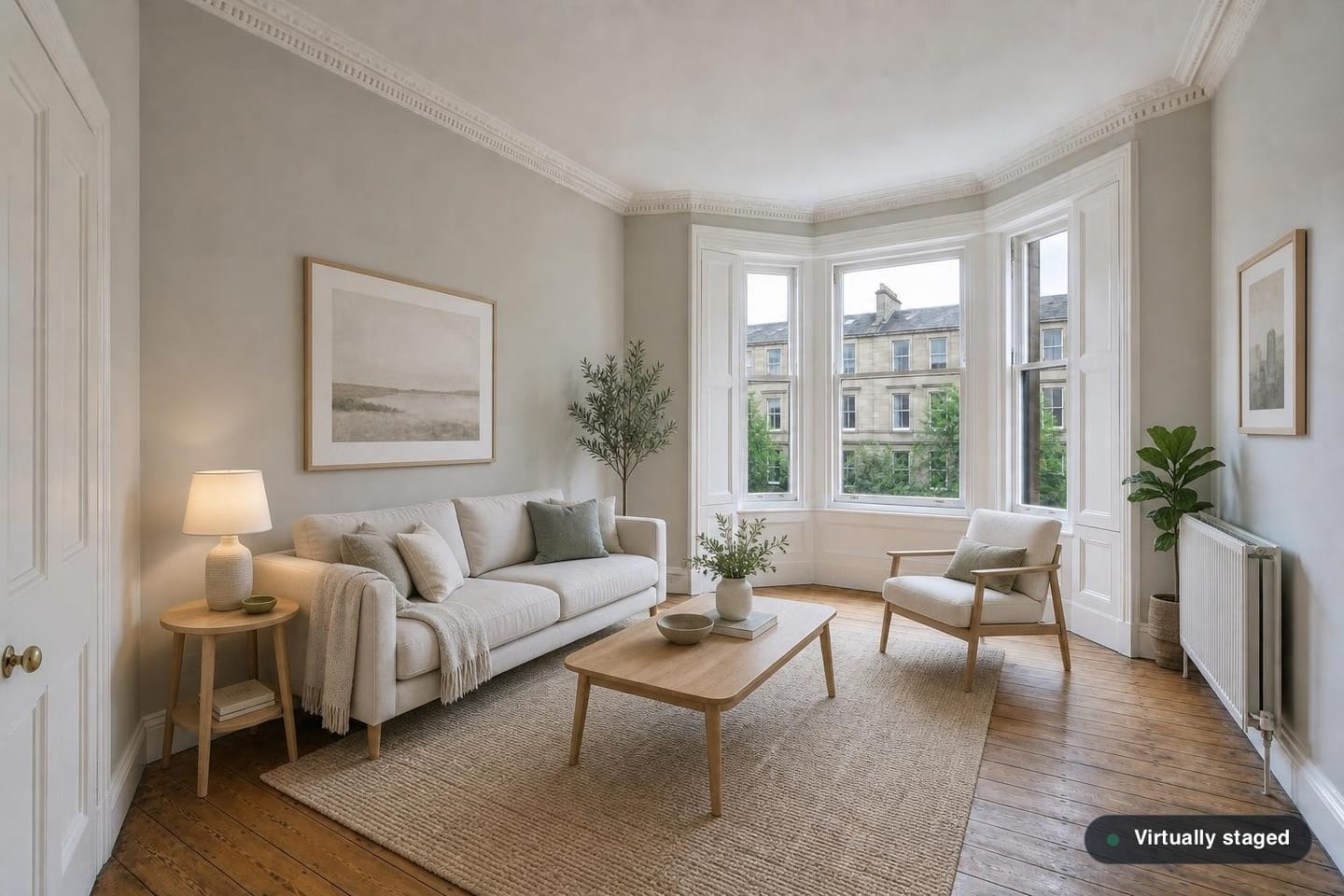
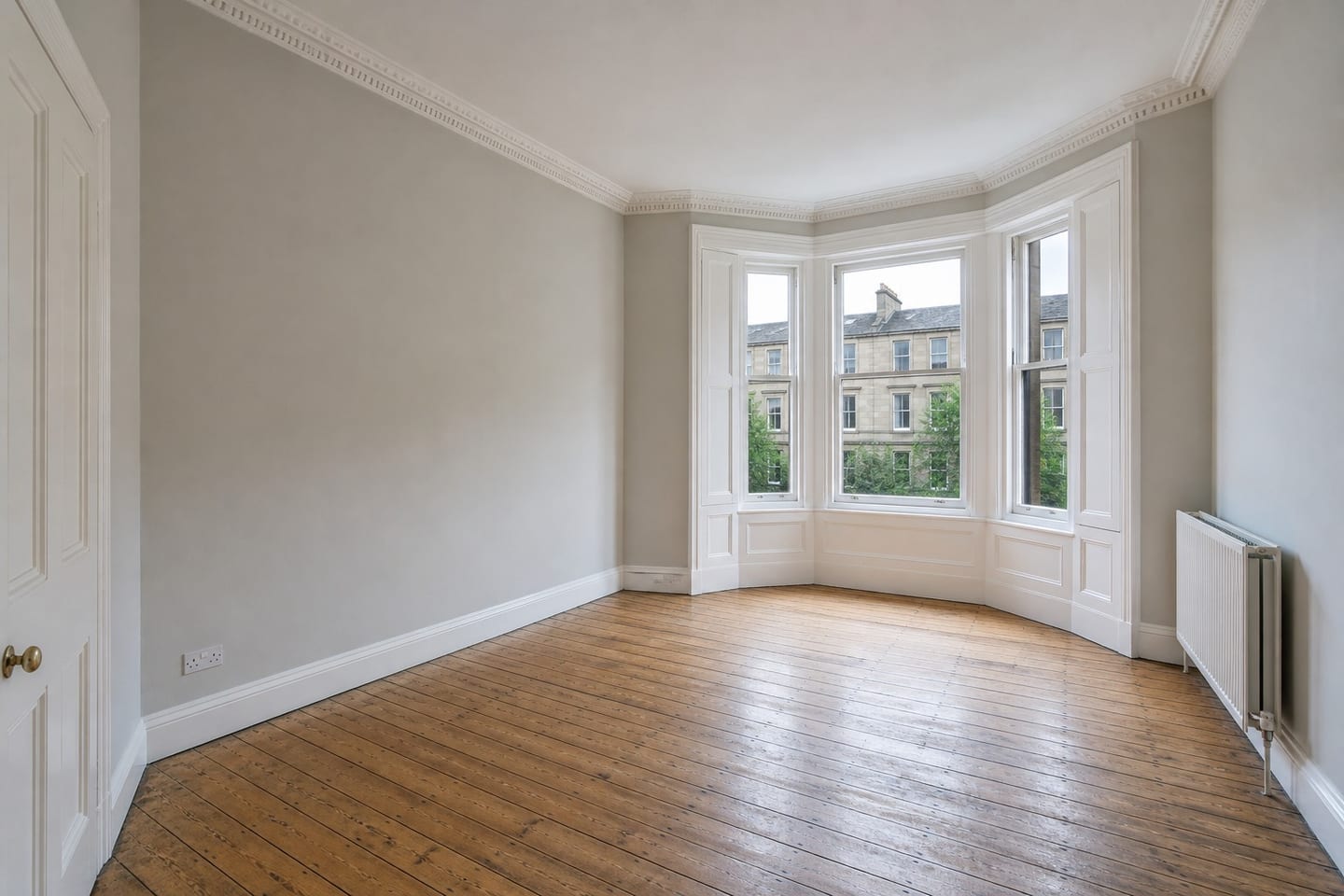 BeforeAfter
The Home Report sets the clock
Most homes marketed for sale in Scotland need a Home Report first — the single survey, the energy report and the property questionnaire — although limited exceptions apply. In practice that often means the photography, the report and the listing cluster into a few days, and the seller is keen to be live once the pack is ready.
That window can be too short to book a physical stager, arrange access, dress the property and reshoot. Virtual staging changes the sequence from photograph → stage → photograph again, to photograph once → stage the file, with no second visit to schedule.
Home staging in Scotland: physical, or virtual?
“Home staging” and “property staging” usually mean the physical version: a stylist brings furniture into the property, dresses the principal rooms, and the photographer shoots them dressed. It works, and on a high-value listing with time to run it can still be the right call.
What we do is the other kind. Nothing is delivered and nobody visits — the furniture is added to the photograph after the shoot, which is what makes it fit a Scottish timetable that often has days rather than weeks between the Home Report being ready and the listing going live.
The trade-off is worth stating plainly. A virtually staged photograph helps a buyer read a room on the portal, and it does nothing at all for someone standing in the empty room at a viewing. If the problem you are solving is the viewing rather than the click, you want a physical stager.
Offers over makes the first week of marketing count
Under an offers-over listing that proceeds to a closing date, the launch period matters: buyers decide whether to view and note interest from the first version of the particulars. Strong photographs therefore need to be ready when the listing goes live, not added after the initial audience has already seen it.
An empty room is the hardest thing to generate interest from, because a buyer scrolling a portal has no way to judge whether the reception takes a three-seater or whether the second bedroom is a bedroom or a study. Furnishing the photo answers that before they decide whether to book a viewing.
Empty is normal here, not exceptional
Common unfurnished instructions include executry and probate sales, buy-to-let flats between tenancies, relocations that have already happened, and new-build plots where the show home is a different unit entirely.
These are the kinds of instructions where physical staging may be impractical because budget, access or time is limited, while a furnished illustration can still help a buyer read an empty room.
Solicitor estate agents and the marketing standard
Much of the Scottish market is handled by solicitor estate agents, who market property under professional obligations as well as the consumer-protection rules that apply across the UK. That tends to make the disclosure question the first one asked about virtual staging, rather than an afterthought.
The answer we've built toward: furniture-and-decor-only prompts, your untouched original kept alongside every render so the two can be compared, a badged version of each image, and a one-line disclosure note for the listing description. Disclosure is supplied by default rather than hidden behind a setting; the comparison is there to make your own pre-publication review quick, because that review is the real gate.
Rooms that come up again and again
Scottish housing stock has its own recurring shapes, and they need different furniture. Tenement flats give you high ceilings, deep bay windows and box rooms that are genuinely hard to read empty. A staged box room can illustrate one plausible use, but it must not imply a bedroom classification or dimensions the particulars do not support.
Period townhouses and conversions bring cornicing, shutters and proportions that furniture has to sit inside rather than fight. New-build flats have the opposite problem: they photograph as clean, well-lit and completely characterless until something in the room gives the eye a scale reference.
Questions Scottish agents ask
- Can I stage photos before the Home Report is ready?
- You can prepare them — staging works on the photographs, not the property, so nothing about it depends on the report. What the Home Report gates is public marketing of the property, and that timing is unchanged: you simply arrive at that point with the furnished images already in hand.
- Do I have to disclose that photos are virtually staged?
- You should make the staging clear. Every gallery includes a corner-badged version of each render and a one-line disclosure note to paste into the listing description. The exact treatment still depends on the listing, portal and your own compliance guidance.
- Will the staged photo change anything about the property itself?
- It is designed not to. The prompt permits furniture and decor only, and every render is delivered alongside your untouched original so the two can be compared directly. There is no automated vision check behind that, so you must review the result and reject any image that removes a defect or changes a wall, window, floor, fixture or view.
- How quickly can I get images back?
- Photos render in parallel rather than waiting in one queue, and we email you when the gallery is ready. Actual turnaround depends on the number of photos and current model load.
- Does this work for rural and Highland listings?
- Yes — the process is the same wherever the property is, since it works from your photographs. Cottages and converted steadings tend to need the furniture scaled carefully to low ceilings and irregular rooms, which is what the per-room style choice is for.
Stage a room from your next Scottish listing
One empty-room photo, one style, no card. We'll email when the free room is ready.
Stage a room freeThis page describes how the product works and the market conventions it's designed around. It isn't legal advice, and it isn't a statement of your obligations as an agent — take those from your compliance lead or solicitor.