Home gyms
Staging a home gym
Finished basements, converted garages and long bonus rooms tend to show up in a gallery as unlabeled square footage. Furnishing one as a gym assigns it a use while claiming nothing about the building itself.
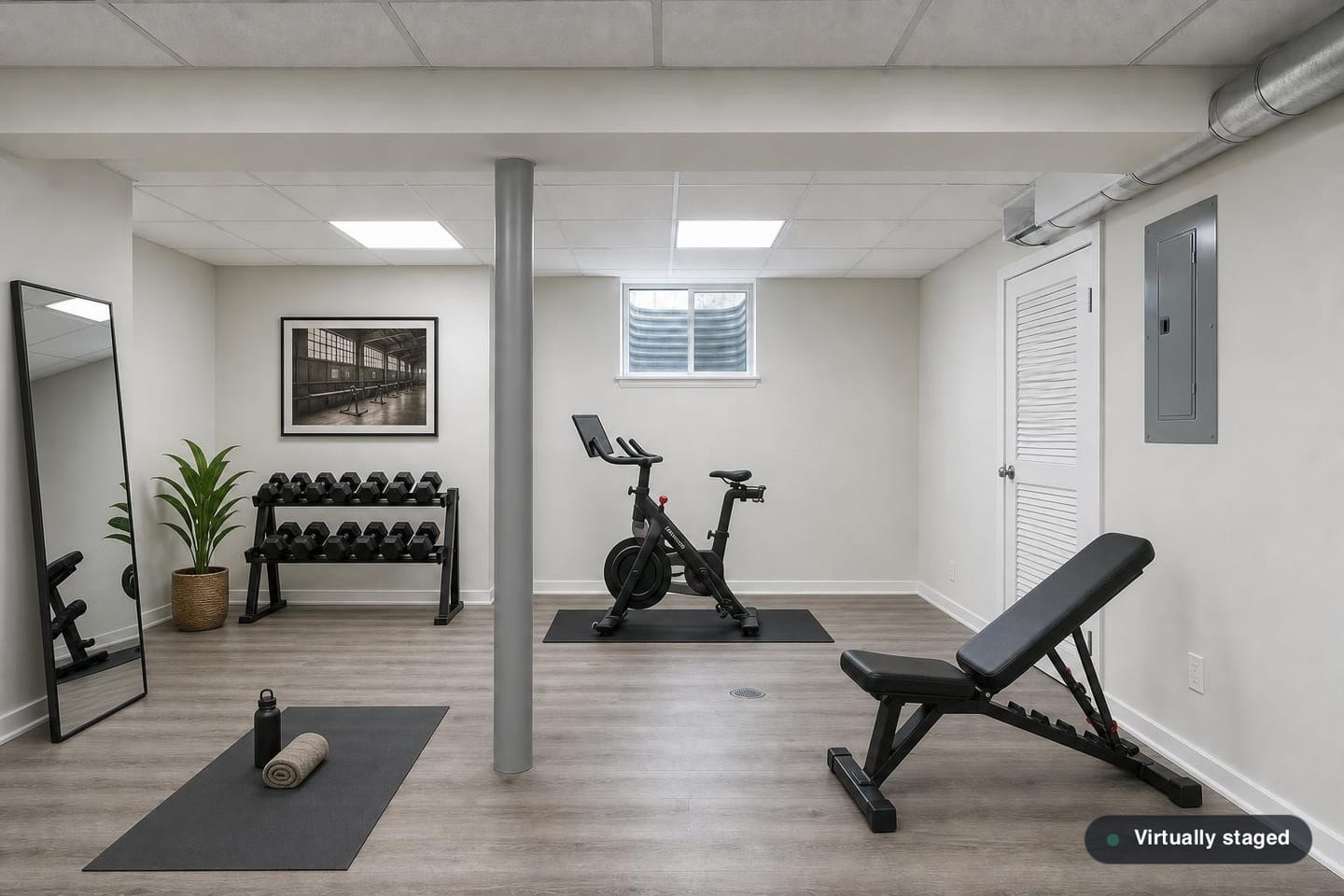
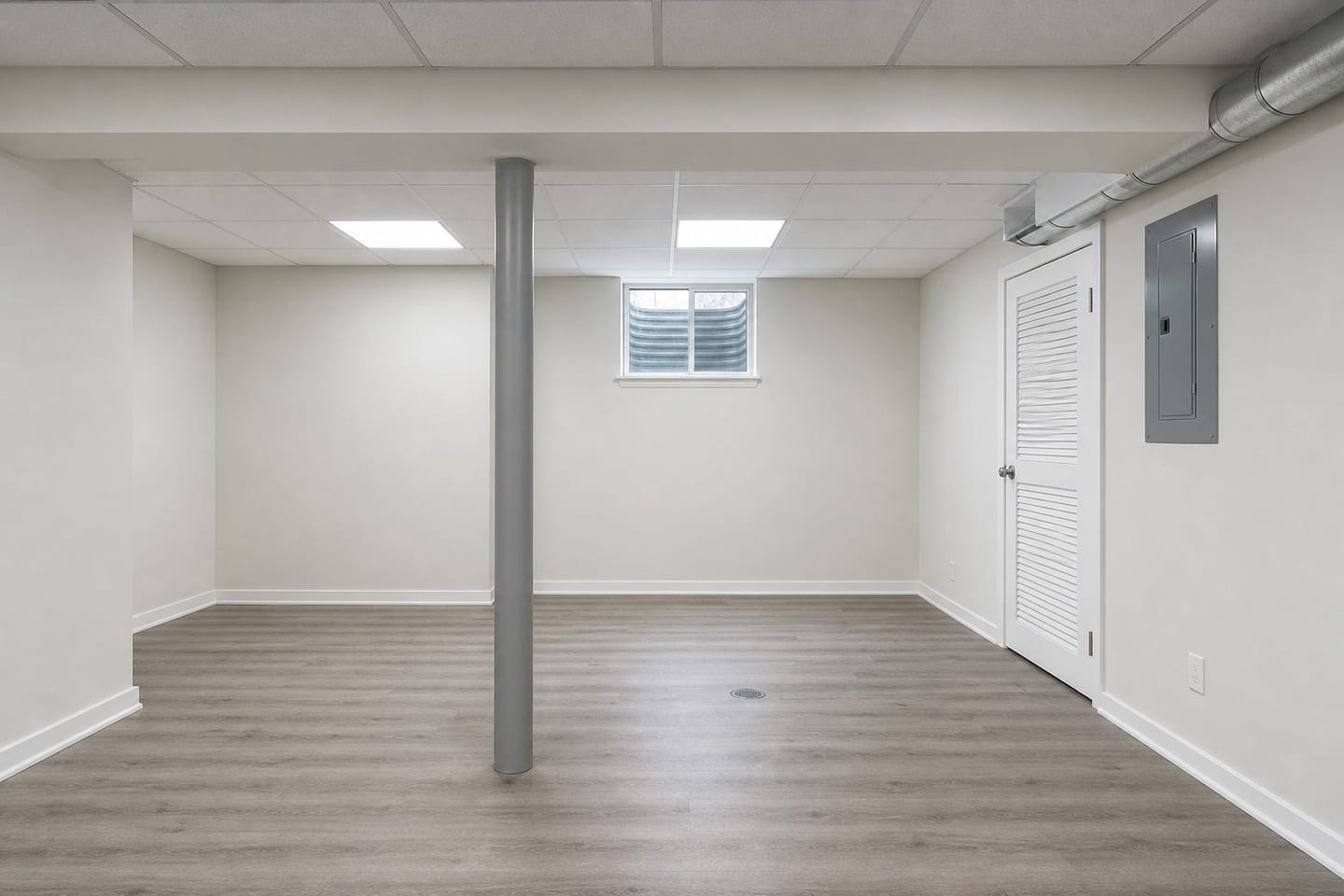 BeforeAfter
Unassigned square footage is wasted in the gallery
A finished basement photographed empty is a large carpeted rectangle with a support column in it. A buyer scrolling on a phone registers it as storage and moves on — which is a waste, because that square footage is often the real difference between this house and the comparable one two streets over.
Assigning one concrete use is what makes it register. For a space with no plumbing, little daylight and a durable floor — which is to say most finished basements and nearly every converted garage — a gym is the reading that asks the least of the buyer's imagination.
It also sidesteps a problem that staging a basement as a bedroom or a guest suite creates: a gym implies nothing about egress, permits or whether the space counts as finished square footage.
Equipment is furniture; the building is not
Everything added stands on the floor and could be carried out again: cardio equipment, a bench, free weights on a rack, a mat, a mirror propped against the wall. In a small space the honest answer is two or three of those, because a rower with no room to pull and a rack backed against a bench read as a storage unit rather than as a place anyone trains.
What does not change matters more here than almost anywhere. Basements and garage conversions carry the tells a buyer and an inspector both look for: a lally column or steel post, exposed ductwork and a bulkhead running across the ceiling, the furnace and water heater closet, a sump pit, an egress or window well, a floor drain, a step down from the house, a boarded-over garage door opening, the panel box on the wall.
Every one of them stays. They are what tells a buyer, and an inspector, what the space actually is, and editing one out of the frame changes the answer to that question — which is a categorically different act from setting a weight bench down in front of it.
What the photo does not say
Furnishing a space as a gym shows a use. It is not a permit, a code opinion or a square-footage claim, and it says nothing about whether the basement finish was inspected, whether the ceiling clears the required height, or whether any of the area counts as finished for the appraisal. Those answers belong in the listing data and the seller's disclosures, where they can be stated properly.
Holding that line is what keeps the photograph worth publishing. It proposes one way to use the space, it is labelled as staged, and the untouched original sits beside it with the column and the ductwork exactly where the buyer will find them.
Home gym questions
- Will it remove the support column or the ductwork?
- No, and it must not. A column, a soffit, a bulkhead and the mechanical closet are the building. A basement that no longer looks like a basement in the photograph is a materially different space from the one for sale.
- Is a gym the right use, or should it be a media room or a playroom?
- Depends on the space. A gym suits a hard floor, low light and no plumbing. A carpeted basement with a wet bar might read better as a media room; a room with good windows might read better as a playroom. Render two and choose.
- Does staging a converted garage imply the conversion was permitted?
- It should not be read that way, and nothing in the image asserts it — but permits, ceiling height and finished-square-footage status all belong in your listing data and disclosures rather than being left to a photo.
- Can the render make a dark basement look brighter?
- No — the exposure and the direction of the light are preserved from your frame. Bring lighting to the shoot if the space needs it; what comes back adds objects to the room, not illumination.
Give the blank space a use
One free render on the room nobody knows what to do with. Original included.
Stage a room freeGeneral information about how the software behaves and how US housing stock photographs. Not legal advice, and not a statement of what your state commission, your MLS or your broker requires of a listing image — confirm those before a staged photo is published.