Entryways
Staging an entryway
The foyer is often the first interior photograph in a listing and almost always the least considered. Empty, it is a patch of tile between a door and a staircase; furnished, it is where a buyer starts imagining coming home.
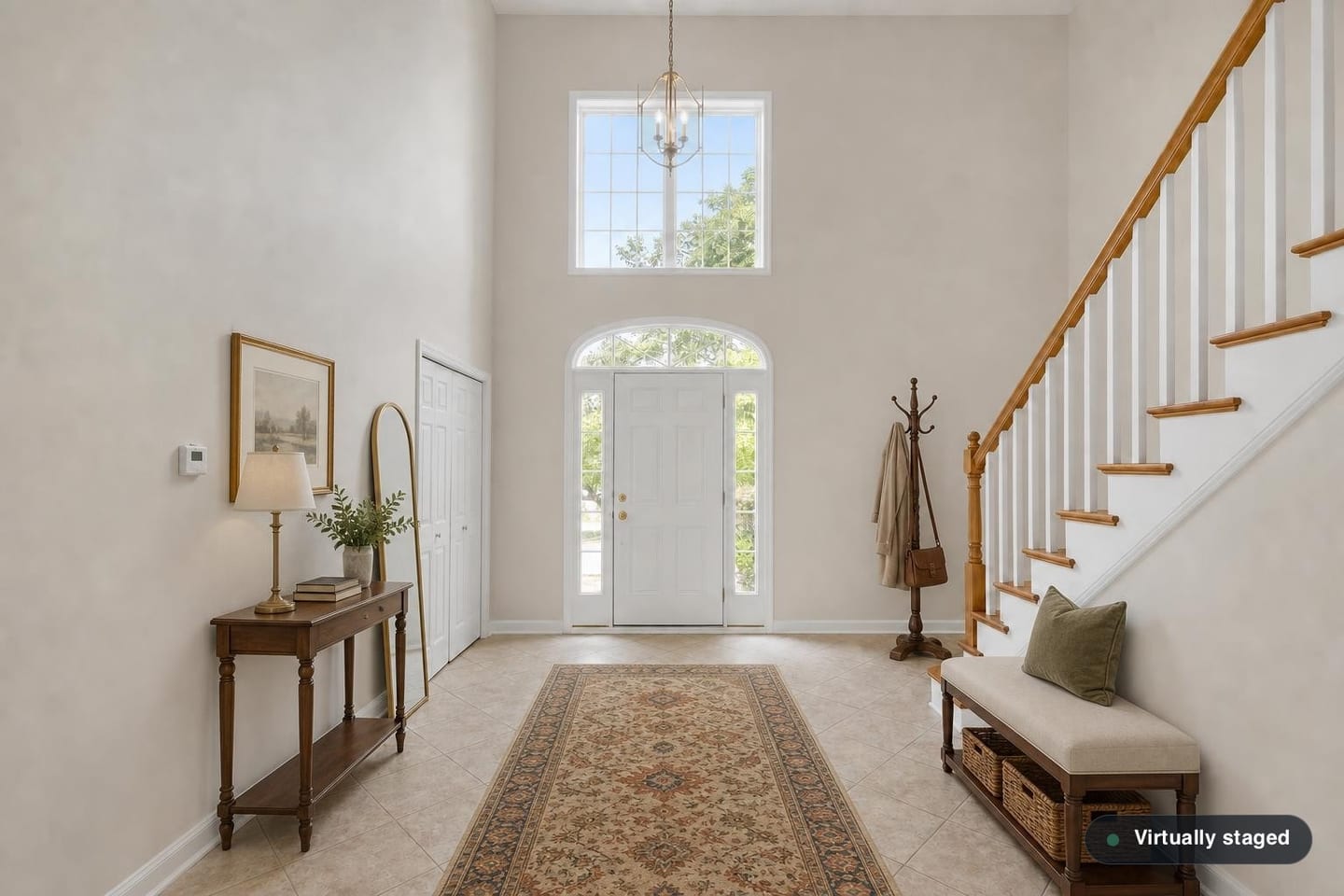
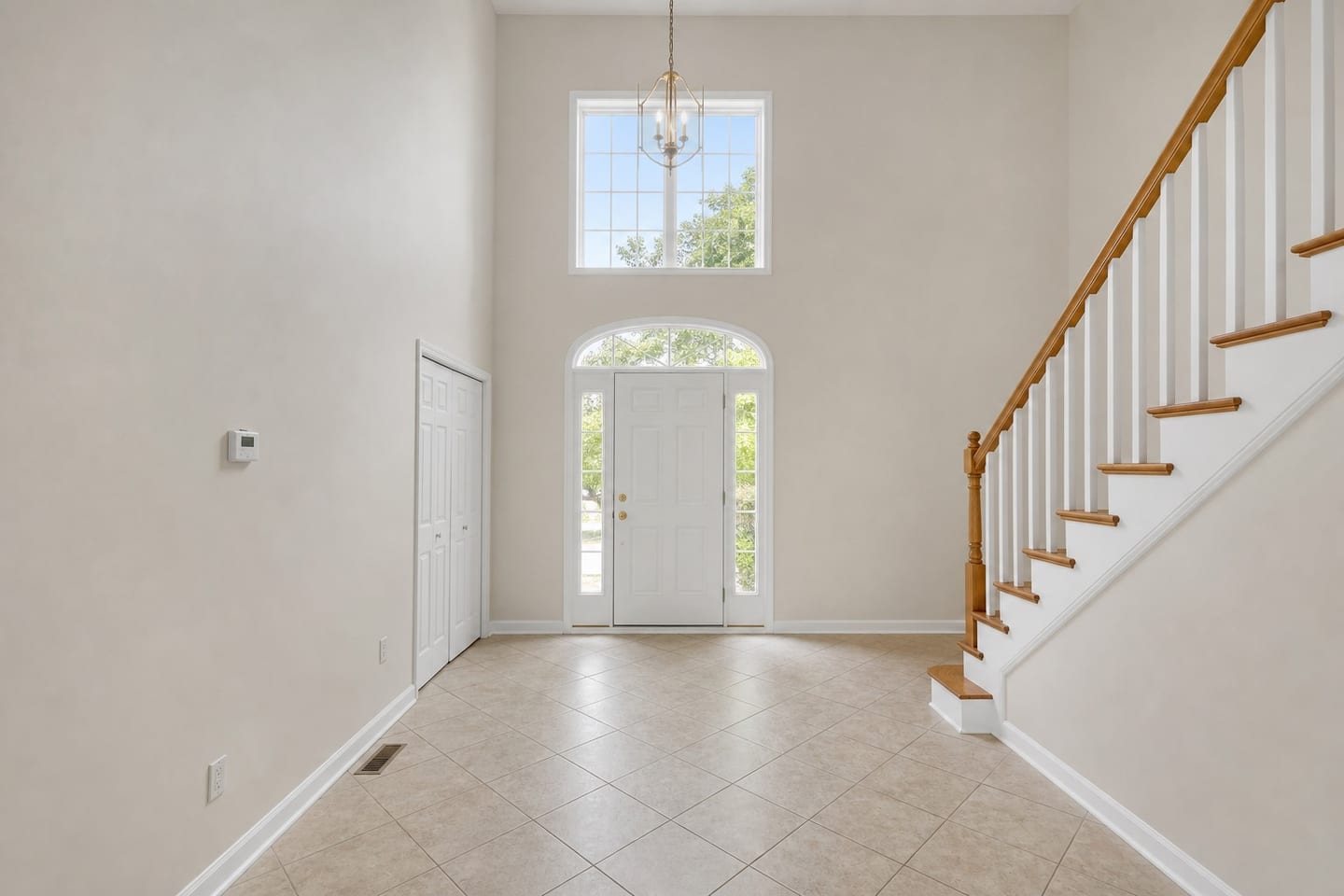 BeforeAfter
A small room doing a disproportionate job
The entry in a two-story tract home is usually a modest square with a staircase on one side, a coat closet on the other and a sightline straight through to the great room. Its job in the gallery is not to show capacity — it is to establish that the house has a real entry at all, rather than a front door that opens into the living room, and to set up the walk through the rest of the set.
Two-story foyers have the opposite problem: all volume, no scale. A console table and a mirror give the eye something of known size to measure the height against, which is the only way a photograph conveys that ceiling.
The entry is also where the finishes live — tile or wood flooring, the stair rail and balusters, the front door with its sidelights and transom. Those photograph well and mean nothing to a buyer scrolling past an empty hallway.
What fits by the front door
A slim console against the wall opposite the stairs, a runner, a leaning or hung mirror, and a little greenery. That is the realistic set for most US entries, and it already leaves the door swing and the walkway clear. A bench with baskets works where the entry widens or where there is a genuine mudroom off the garage; a coat stand works where there is a corner to lose.
Everything past that is optimism. An entry staged with a console, a bench, a coat stand, a mirror and a rug has very likely been widened to accommodate them, and that is exactly what to look for when you compare the render against the original.
Door swing is the placement check that matters most in this room. The front door, the coat closet door and the door to the garage all need their arc clear, and a console standing where a door opens is the most common placement failure here.
Features that stay exactly as shot
The front door and its hardware, sidelights, the transom, the coat closet and its doors, the stair treads, risers, railing and balusters, the flooring, the light fixture over the entry, the thermostat and any wall niche stay unchanged. Scuffed tile stays scuffed and a worn stair tread stays worn — an entry that repairs itself between the photograph and the showing is exactly the kind of surprise that costs trust on the whole set.
A runner may cover part of the floor, which is occlusion and is fine, provided the flooring that is visible is the flooring that is there.
Entryway questions
- Is an entry photo worth staging?
- It is worth it in a house where the entry is a genuine feature — a two-story foyer, good flooring, a real mudroom off the garage. In a plain entry with nothing to show, the slot is better spent on a bonus room or the great room.
- Can it replace or repair the flooring?
- No. Flooring is a property feature, and cracked tile or a worn transition strip stays as photographed. A runner can be laid over part of it, which is usually what is really being asked.
- Will it add a light fixture to a dim entry?
- No. Fixtures cannot be added or changed and lighting direction is kept as shot. A lamp on a console is free-standing decor and can appear; a new pendant over the foyer cannot.
- Should the entry be the first photo in the listing?
- Usually not — the lead photo is the exterior, and the great room or kitchen normally follows. A staged entry works well as the first interior shot, setting up the sequence through the house.
See the entry the way a buyer scrolls it
One free render, with the original beside it so you can check every tile and baluster.
Stage a room freeGeneral information about how the software behaves and how US housing stock photographs. Not legal advice, and not a statement of what your state commission, your MLS or your broker requires of a listing image — confirm those before a staged photo is published.