Mid-Century
Mid-Century virtual staging
Mid-Century is the most useful style for the enormous stock of 1930s semis, post-war terraces and ex-local-authority houses that make up so much of the British market.
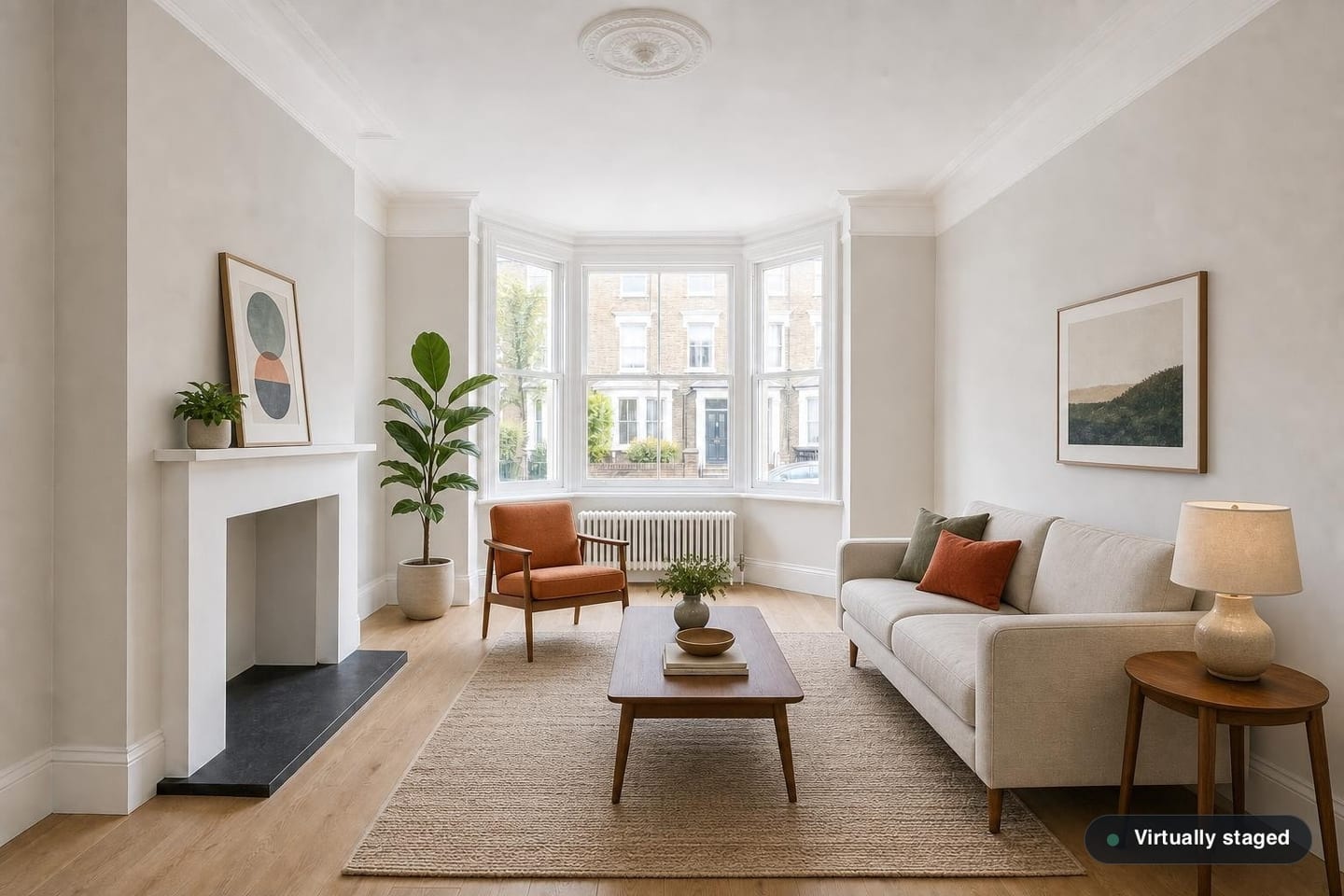
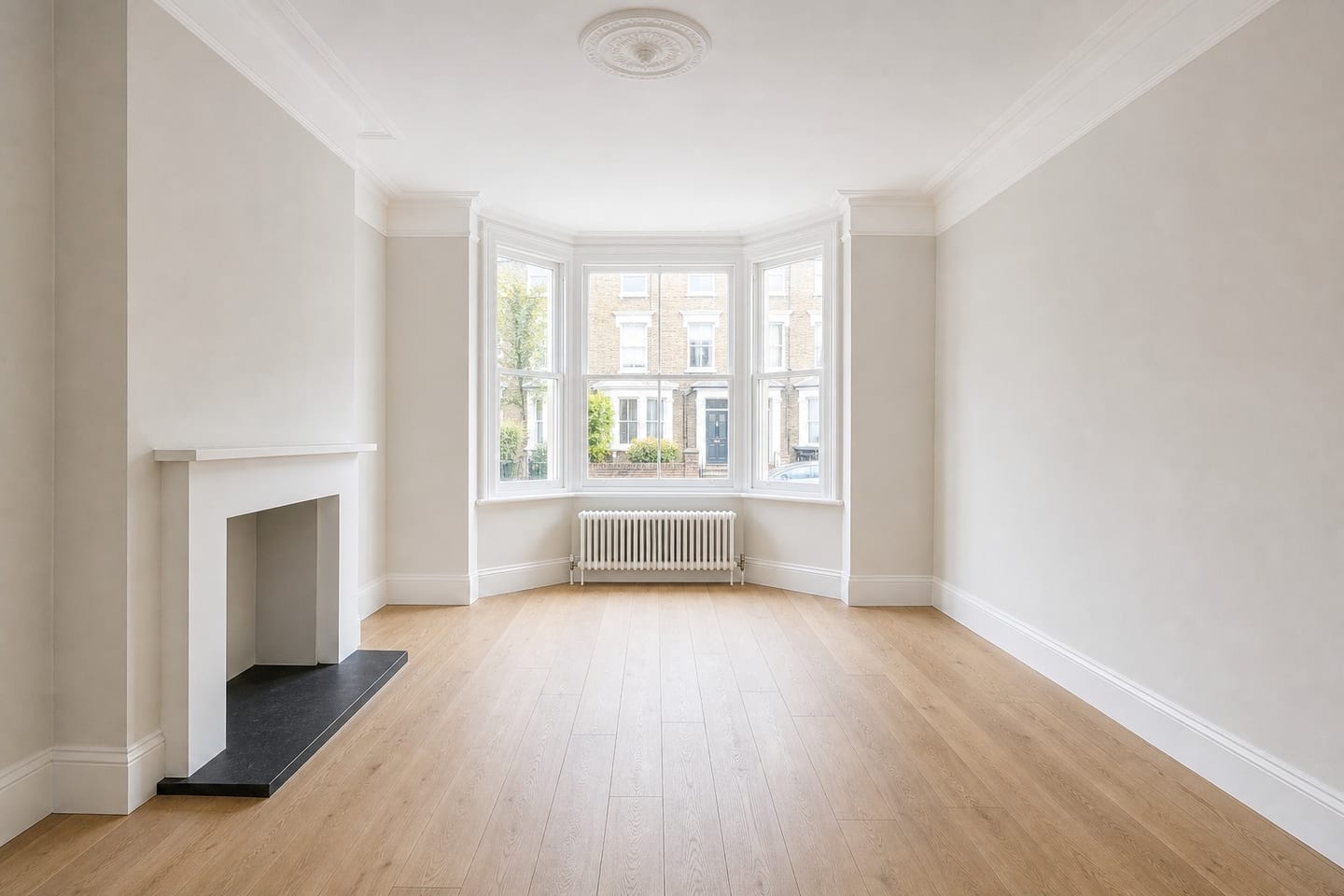 BeforeAfter
Warm without being fussy
Walnut and teak tones, tapered legs, clean upholstery lines and usually one saturated accent — a mustard chair, a deep green cushion. It photographs with more warmth than Scandinavian and more energy than Japandi, while keeping the same visual lightness: raised furniture on slim legs shows floor underneath, which keeps a room reading as large as it is.
It is also the style with the broadest cross-generational appeal. It does not read as young the way Industrial Loft can, or as traditional the way a formal scheme does.
Where it works
Interwar and post-war housing above all, where the furniture is roughly contemporary with the building and the result looks coherent rather than styled. It works well in reception rooms with a bay, in dining rooms, and in flats in converted houses.
It is a good choice when a listing needs to stand out in a street of near-identical properties, because the accent colour gives the lead photograph something to remember it by without making the room look decorated.
Where it falls flat
In a very small room the low tables and side pieces start to look like obstacles, and Scandinavian's simpler set is cleaner. In a genuinely high-end listing it can read as insufficiently serious next to Luxury Contemporary.
The other risk is going too far. Mid-Century done heavily becomes a period set rather than a home, and a buyer should be picturing their own furniture in the room, not admiring ours.
Which rooms to spend it on
The main reception room, every time. This is a style that wants a sofa, a chair, a coffee table and one accent piece arranged in a room with a bay or a chimney breast, which describes the front room of an enormous share of British housing.
It carries a dining room well too, where a mid-century table and chairs read as a considered choice rather than a hire-shop set. And it works in a knocked-through living-dining space, because the consistent timber tone ties two zones together without either needing its own scheme.
It is weaker in bedrooms, where the low tables and side pieces start to feel like obstacles rather than furniture, and in very small rooms, where Scandinavian's simpler set photographs cleaner. Use it where the room has enough floor for the arrangement to breathe.
Mid-Century questions
- Does Mid-Century suit Victorian properties?
- It can work in a Victorian flat with simpler detailing. In a room with heavy cornicing and a marble chimneypiece, Classic Traditional generally sits better with the architecture.
- Is the accent colour predictable?
- Roughly — expect one saturated piece per room rather than a scheme. If the accent clashes with something real in the room, restyle and re-render.
- Will it suit a new-build?
- Reasonably well, though a new-build with no period reference of its own often reads better in Japandi or Scandinavian, which do not imply an era the building does not have.
Try Mid-Century on your room
One free render on your own photo, original delivered alongside it.
Stage a room freeThis page describes how the product works and how rooms photograph. It is not legal advice — for certainty about your own listings and disclosure, ask your compliance lead or solicitor.