Japandi
Japandi virtual staging
Japandi is the style to reach for when a listing needs to feel considered rather than merely furnished, and the room is not big enough to carry anything heavier.
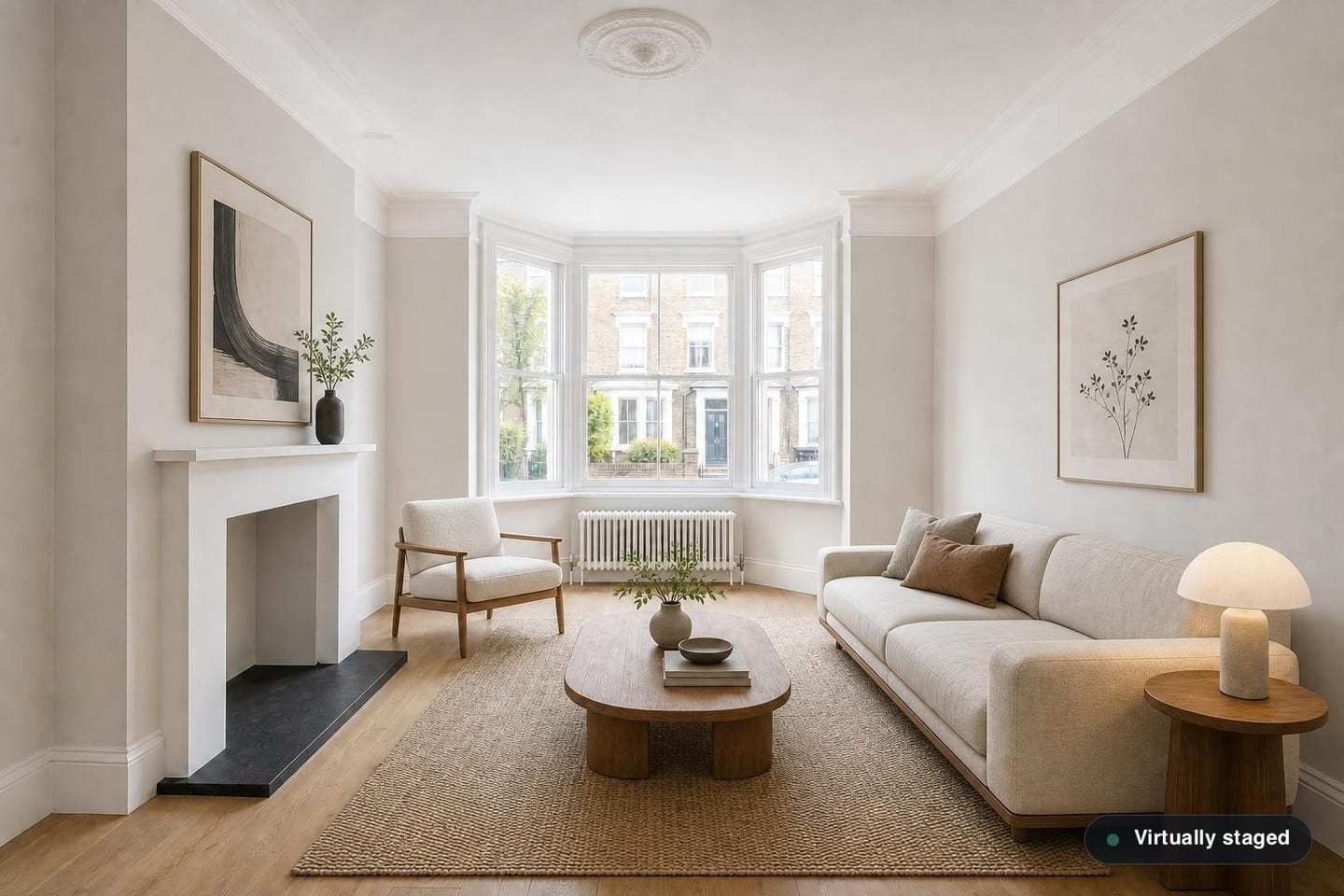
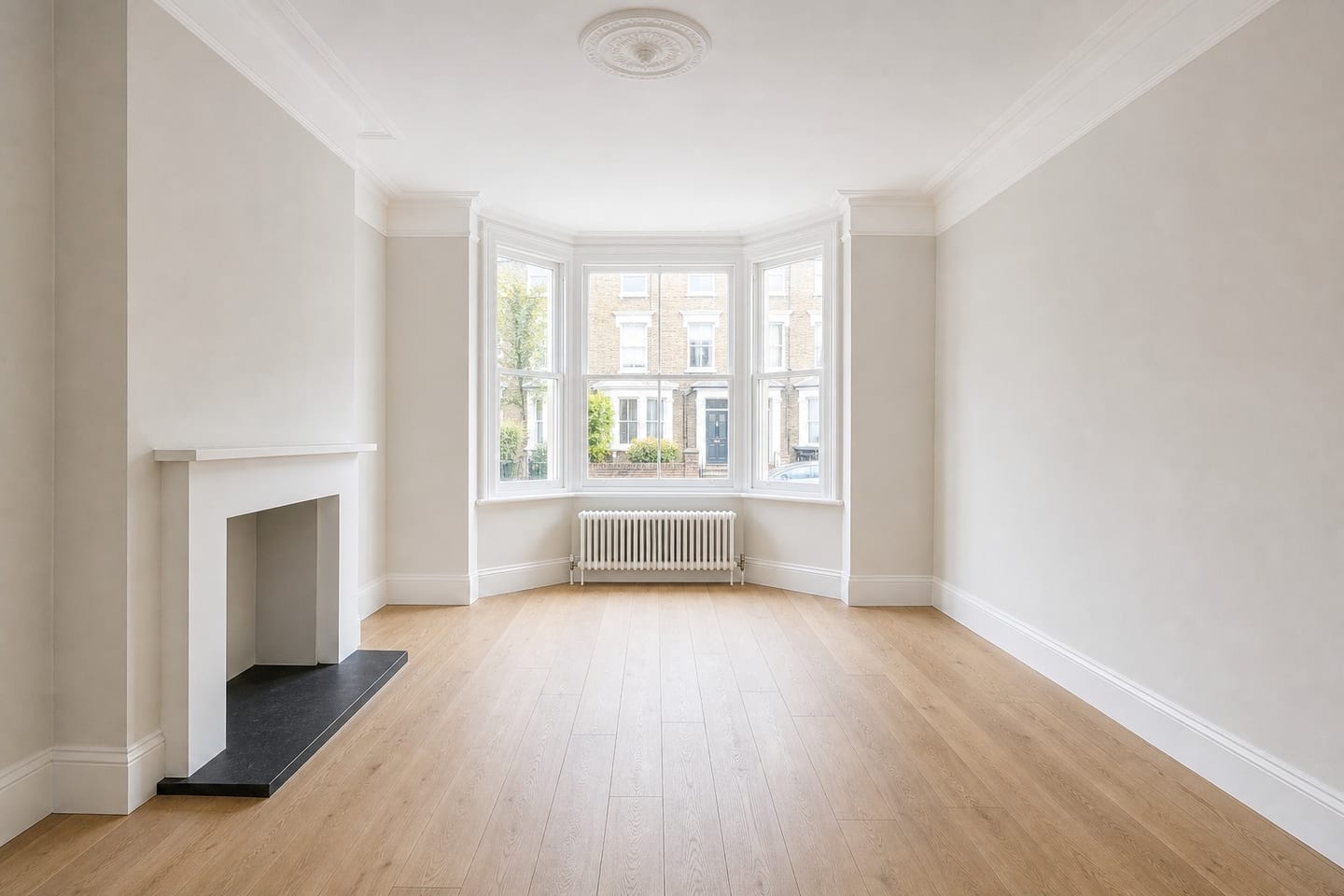 BeforeAfter
Low, warm and deliberately quiet
Low-slung furniture, warm neutrals against darker accents, natural materials and very little of it. The effect in a photograph is a room that looks calm and expensive without any single object shouting — which is a useful trick in a compact flat where a statement piece would simply be in the way.
The low sightlines are the practical part. Furniture that sits below window-sill height keeps the wall and the window visible behind it, so the room's proportions survive the staging. In a room with a modest ceiling height, that is the difference between furnished and full.
Where it works
Modern flats and new-build apartments, principal bedrooms in any stock, and city listings aimed at a professional buyer. It is the strongest bedroom style we have: the palette photographs well in the soft light bedrooms usually get, and a low bed with a single nightstand suits a room that cannot take a full suite.
It also works unusually well in a knocked-through or open-plan space, where its restraint keeps two zones from competing.
Where it falls flat
In a family house in suburban stock it can read as austere — a buyer picturing two children and a dog does not see themselves in it. Modern Farmhouse is the better fit there.
It also needs the room to be reasonably tidy architecturally. In a room with a lot of competing features — a bay, a chimney breast, a serving hatch and a radiator all in one frame — the quietness of the furniture leaves the clutter of the room doing all the talking.
Which rooms to spend it on
Bedrooms first. A low bed with a single nightstand and a restrained palette is the most reliable Japandi photograph there is, and it suits the modest dimensions of most British double bedrooms rather than fighting them.
After that, a modern reception room with flat walls and no period detail, where the style supplies the interest the architecture does not. It is also a good choice for a compact open-plan living space, because a scheme this quiet lets two zones coexist without either one shouting.
Skip it in rooms with a lot of competing architectural features. In a reception with a bay, a chimney breast, a serving hatch and a radiator all in frame, very plain furniture leaves the room's own busyness doing the talking — Mid-Century or Classic Traditional will resolve that better.
Japandi questions
- How is Japandi different from Scandinavian?
- Both are light and restrained, but Japandi sits lower, runs warmer, and uses darker contrast — so it reads more deliberate and slightly more premium. Scandinavian is safer; Japandi is more memorable.
- Does it suit period properties?
- It can, in a flat conversion with clean walls. In a room with heavy Victorian plasterwork the contrast between ornate architecture and very plain furniture rarely resolves well.
- Is it too niche for a mainstream listing?
- Less than it used to be, and its restraint means it rarely alienates. If the property is a family home rather than a flat, though, a warmer style will usually convert better.
Try Japandi on your room
One free render. If it reads too quiet for the listing, restyle it once for free.
Stage a room freeThis page describes how the product works and how rooms photograph. It is not legal advice — for certainty about your own listings and disclosure, ask your compliance lead or solicitor.