Classic Traditional
Classic Traditional virtual staging
In a room with real plasterwork, a marble chimneypiece and full-height shutters, the furniture has an argument to lose. Classic Traditional is the style that does not pick the fight.
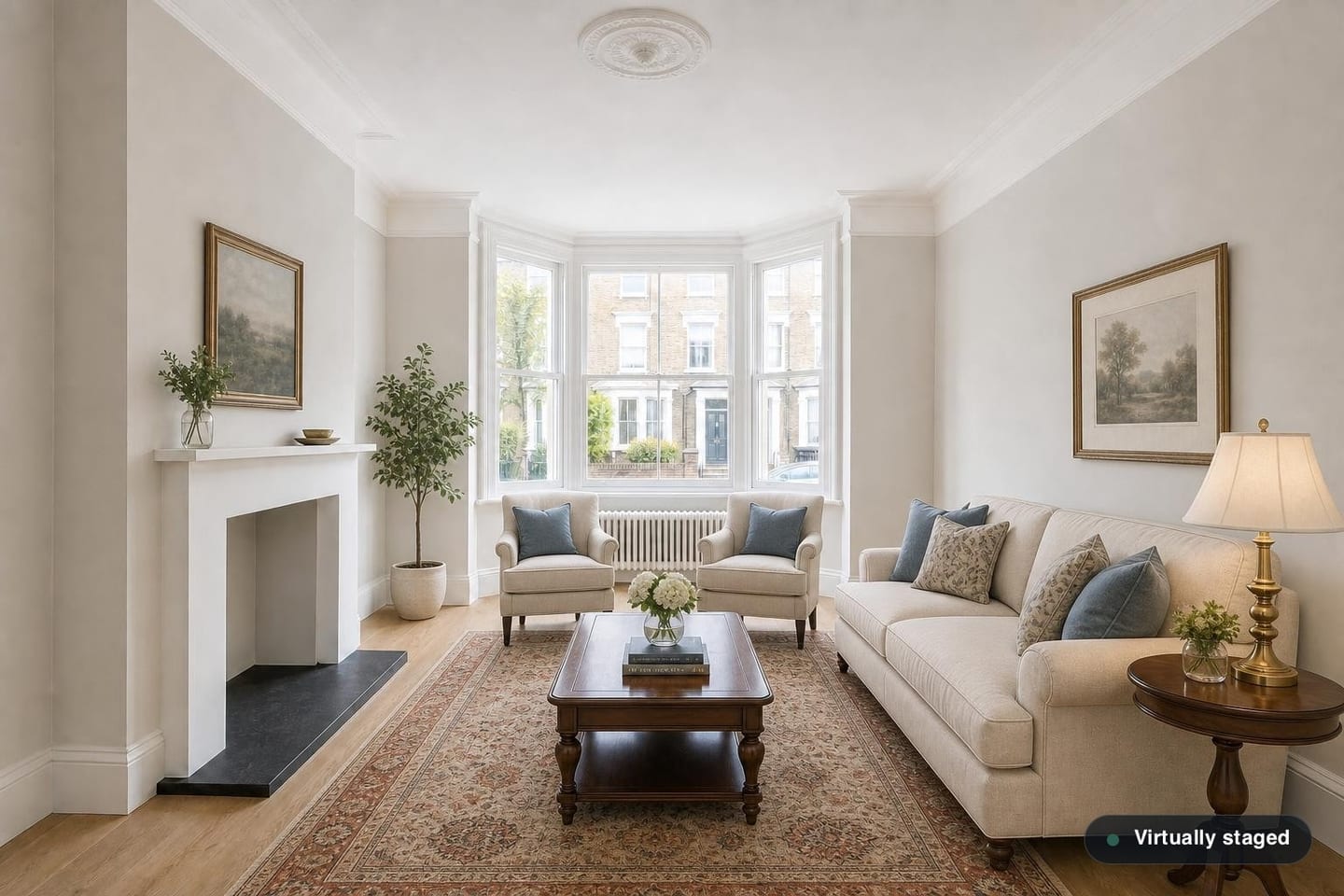
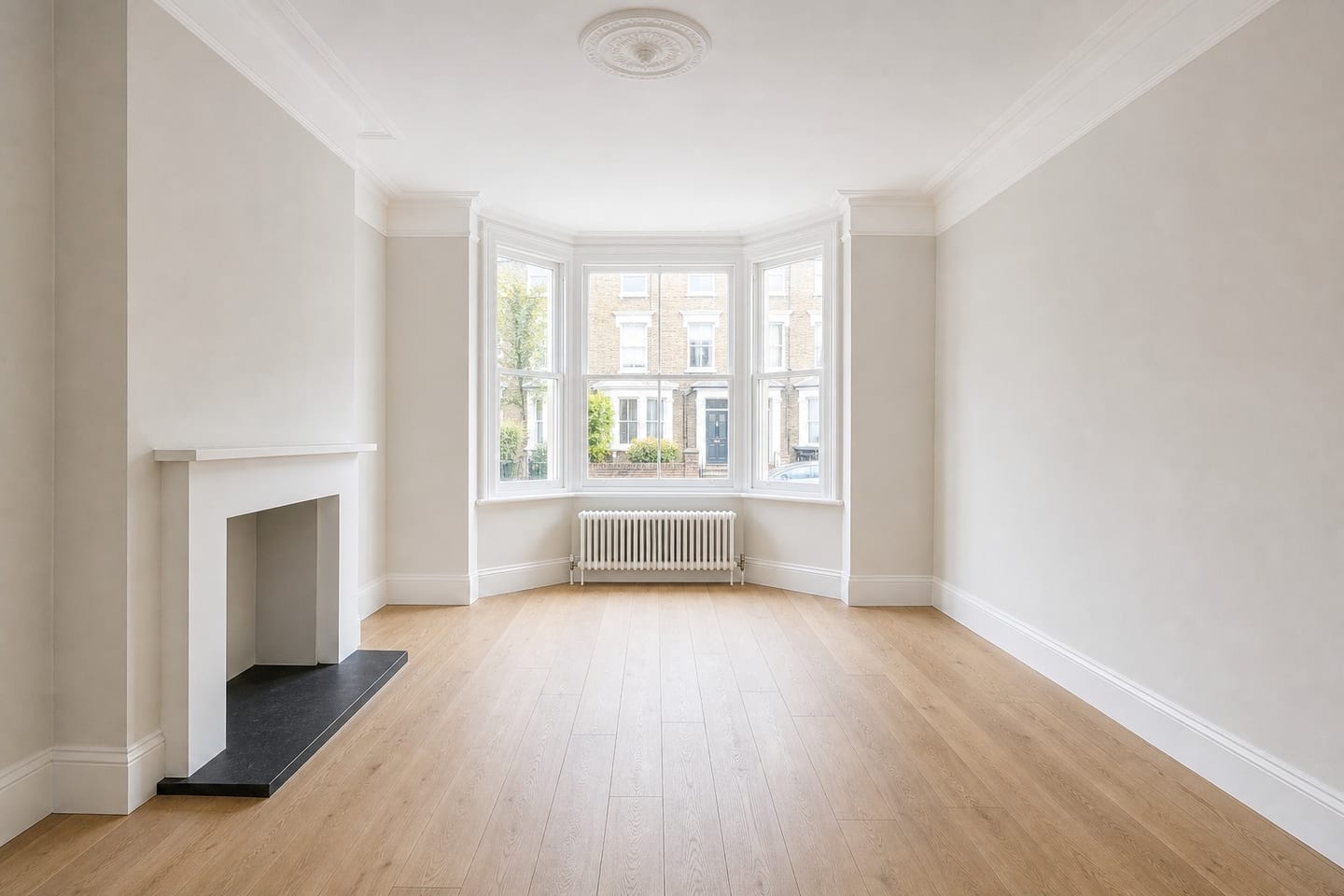 BeforeAfter
Symmetry, and letting the room lead
Tailored upholstery, symmetrical arrangement, warm patterned rugs and a palette that stays in conversation with the joinery. The defining move is symmetry: a sofa squared to the chimney breast with a chair either side reads as settled in a way an asymmetric modern arrangement does not, and it draws the eye to the fireplace rather than away from it.
The purpose is to make the architecture the subject. In a period reception room the plasterwork and the proportions are what the price is built on, and staging that competes with them is staging that has misunderstood the listing.
Where it works
Victorian and Edwardian reception rooms, Georgian drawing rooms, period dining rooms, and older housing stock generally. It suits the buyer demographic for those properties, who tend to be trading up rather than buying a first flat.
It is also the right answer for a formal room in an otherwise modern house — a separate dining room in a large detached property, for instance, where the room's job is formality.
Where it falls flat
In a new-build or a modern flat it reads as dated rather than classic, because there is no architecture for it to be sympathetic to. In a small room its heavier upholstery crowds the frame.
The risk to watch is tipping into pastiche. Traditional done heavily makes the room look like it belongs to an older owner, which narrows the buyer's imagination — and a room a buyer cannot picture themselves in is not doing its job however handsome it looks.
Which rooms to spend it on
The rooms with the plasterwork. A Victorian or Edwardian front room with a cornice, a ceiling rose and a chimneypiece is what this style exists for, and it is usually the lead interior photograph in exactly the kind of property where that matters most.
A separate dining room is the second — formality is the room's actual job, and a symmetrical table setting reads as appropriate rather than stiff. A period principal bedroom with a fireplace takes it well too.
It also suits a tiled Victorian hallway, where a console and a runner arranged symmetrically frame the tiling instead of competing with it. What to avoid is a modern room in the same property: without architecture to be sympathetic to, the style has nothing to do, and the room simply reads as dated.
Classic Traditional questions
- Will it restore or add a fireplace surround?
- No. A chimneypiece is a property feature: it may be furnished around and partly occluded, but it cannot be added, replaced or restored in the image. A missing surround stays missing.
- Is it the right choice for a period property with a modern interior?
- Not necessarily. If the room has been stripped of its detailing, there is nothing for the style to be sympathetic to, and Mid-Century or Scandinavian will usually photograph better.
- Does it appeal to younger buyers?
- Less than Mid-Century or Japandi. If the property is a period flat likely to sell to a first-time buyer, a lighter style is usually the safer commercial choice even though the architecture would carry this one.
Try it on a period room
One free render, with the cornicing and chimneypiece exactly as you shot them.
Stage a room freeThis page describes how the product works and how rooms photograph. It is not legal advice — for certainty about your own listings and disclosure, ask your compliance lead or solicitor.