Coastal
Coastal virtual staging
Coastal is the most situational style of the eight. Used on the right property it does something no other style can; used inland it simply looks like a mistake.
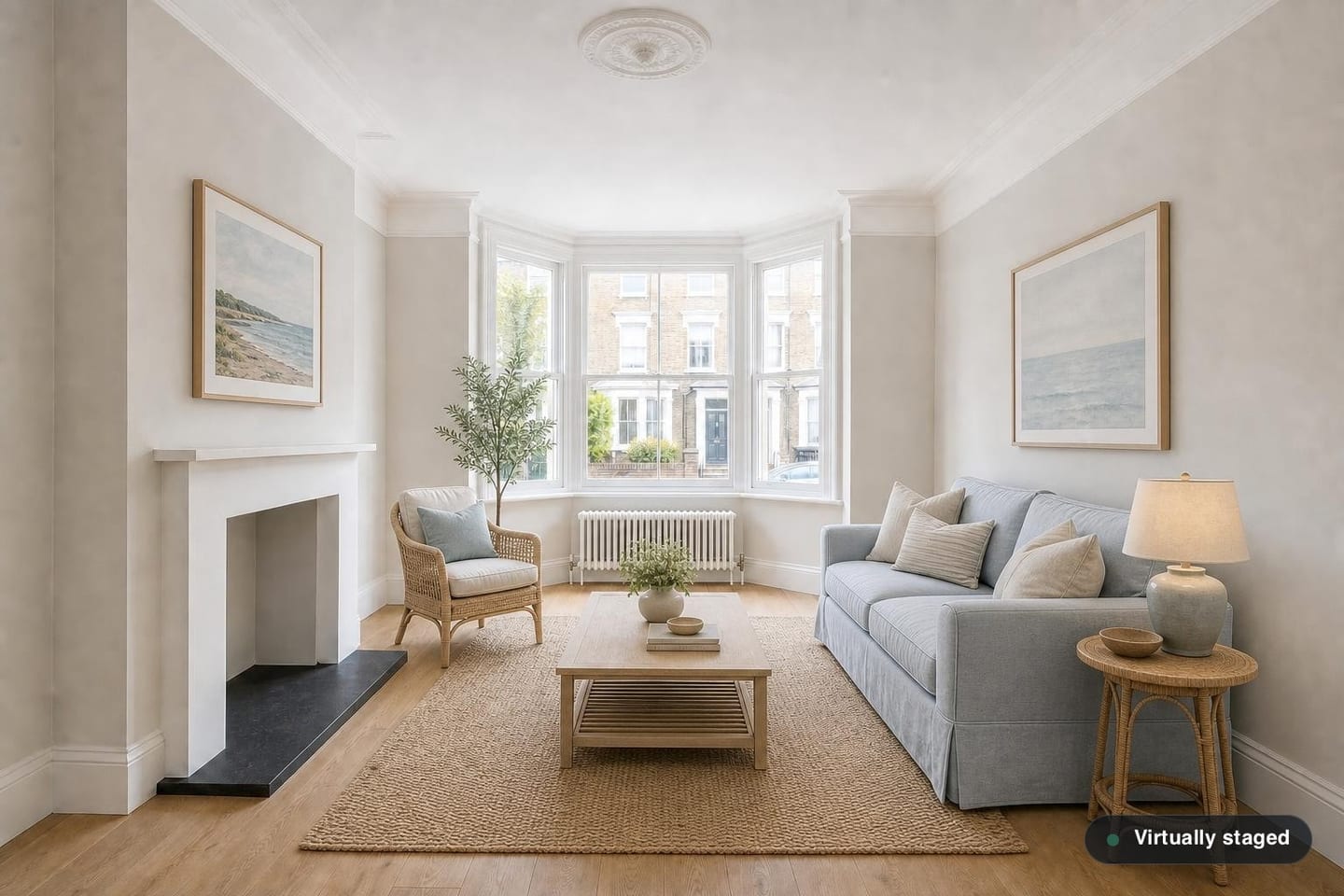
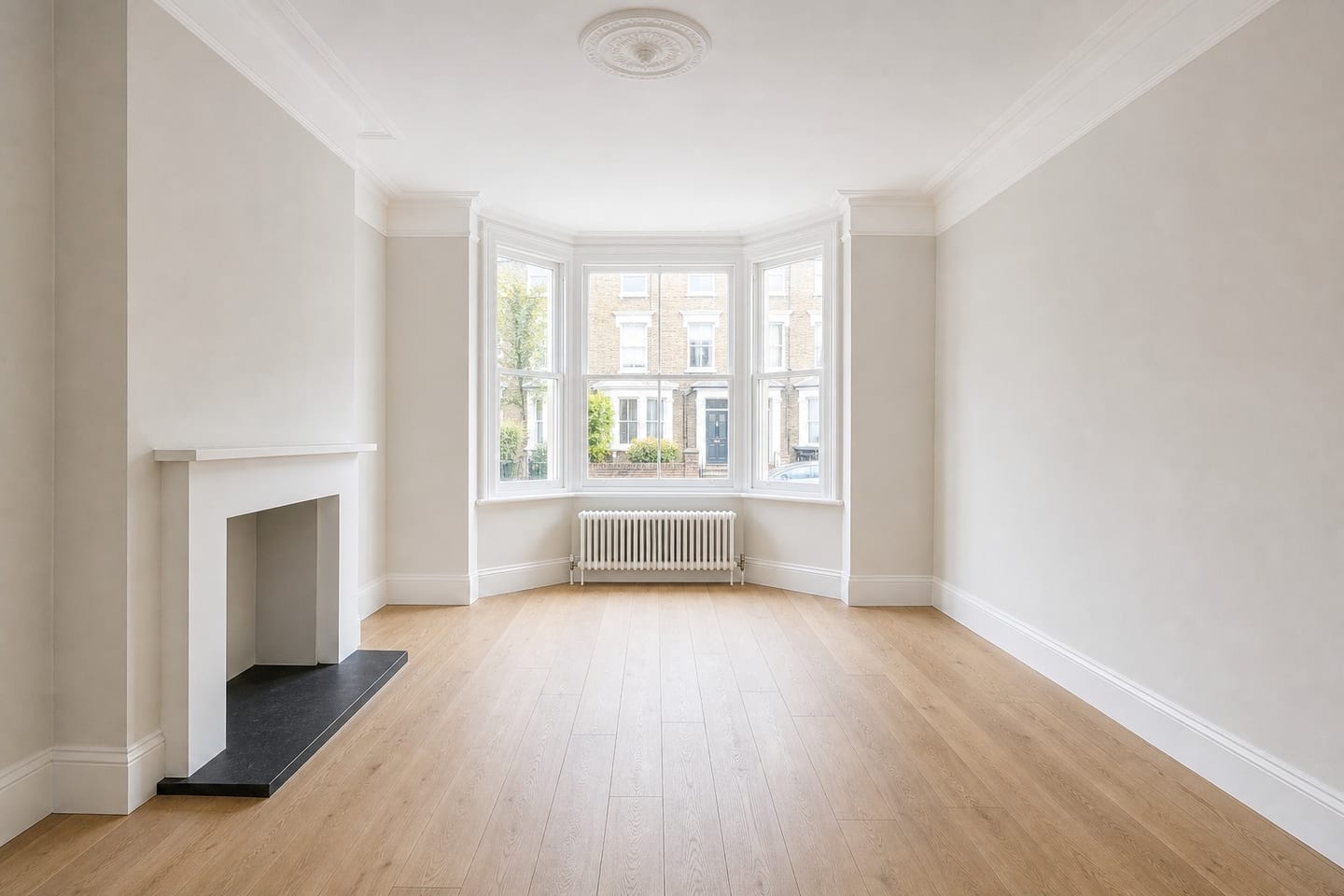 BeforeAfter
Selling a way of life rather than a room
Pale blues and greens, rattan and cane, washed linen, driftwood tones and a generally sun-bleached palette. The furniture is doing something slightly different from the other styles here: it is less about showing scale and more about confirming a proposition the buyer already has in mind when they clicked on a seaside listing.
That makes it unusually effective in its niche. A buyer looking at a flat above a harbour or a cottage two streets from a beach is buying an idea, and staging that agrees with the idea removes friction.
Where it works
Seaside and estuary property, waterfront apartments, holiday lets and second homes, and rural property with a strong outlook. It is the natural choice for a Scottish coastal cottage or a converted dockside flat, and it suits the short-let market where the listing is competing on atmosphere.
It also photographs well in rooms with a lot of natural light, where its pale palette does not go flat.
Where it falls flat
Anywhere without water. A Coastal scheme in an inner-city terrace reads as an unexplained theme, and a buyer notices the mismatch before they notice the room. This is the one style where the wrong choice is actively worse than no staging.
It is also a poor fit for a high-value formal property, where its casualness undercuts the price, and for a dark room, where the washed palette turns grey.
Which rooms to spend it on
Whichever room has the view. That is the whole logic of this style: it works by agreeing with something outside the window, so the photograph that includes the water is the one that should carry it. A reception room with a sea, estuary or harbour outlook is the obvious case.
Bedrooms in a holiday let are the second: a short-let listing competes on atmosphere rather than on room count, and a pale, breezy bedroom photograph does that job efficiently.
Do not spread it through a property whose only coastal feature is the postcode. If the rooms at the back of the house have no outlook, they are better staged in Scandinavian, which shares the light palette without making a claim about location that the window does not support.
Coastal questions
- Can I use Coastal on a property that is not near the sea?
- You can, but it rarely helps. Without a view or a location that explains it, the palette reads as an arbitrary theme. Modern Farmhouse gives similar warmth with none of the mismatch.
- Will it change the view out of the window to show the sea?
- Absolutely not. The view through any window is reproduced exactly as photographed — altering it would be one of the clearest possible misdescriptions of a property.
- Does it suit holiday lets specifically?
- It is the strongest style for them. Short-let listings compete on atmosphere more than on room count, and this is the style that sells atmosphere.
Try Coastal on a waterfront room
One free render, with your untouched original delivered alongside.
Stage a room freeThis page describes how the product works and how rooms photograph. It is not legal advice — for certainty about your own listings, short-let rules and disclosure, ask your compliance lead or solicitor.