Industrial Loft
Industrial Loft virtual staging
Industrial Loft is the style with the narrowest correct application and the strongest effect when it lands. It needs a building with some hardness to it, and it is wasted on anything domestic and soft.
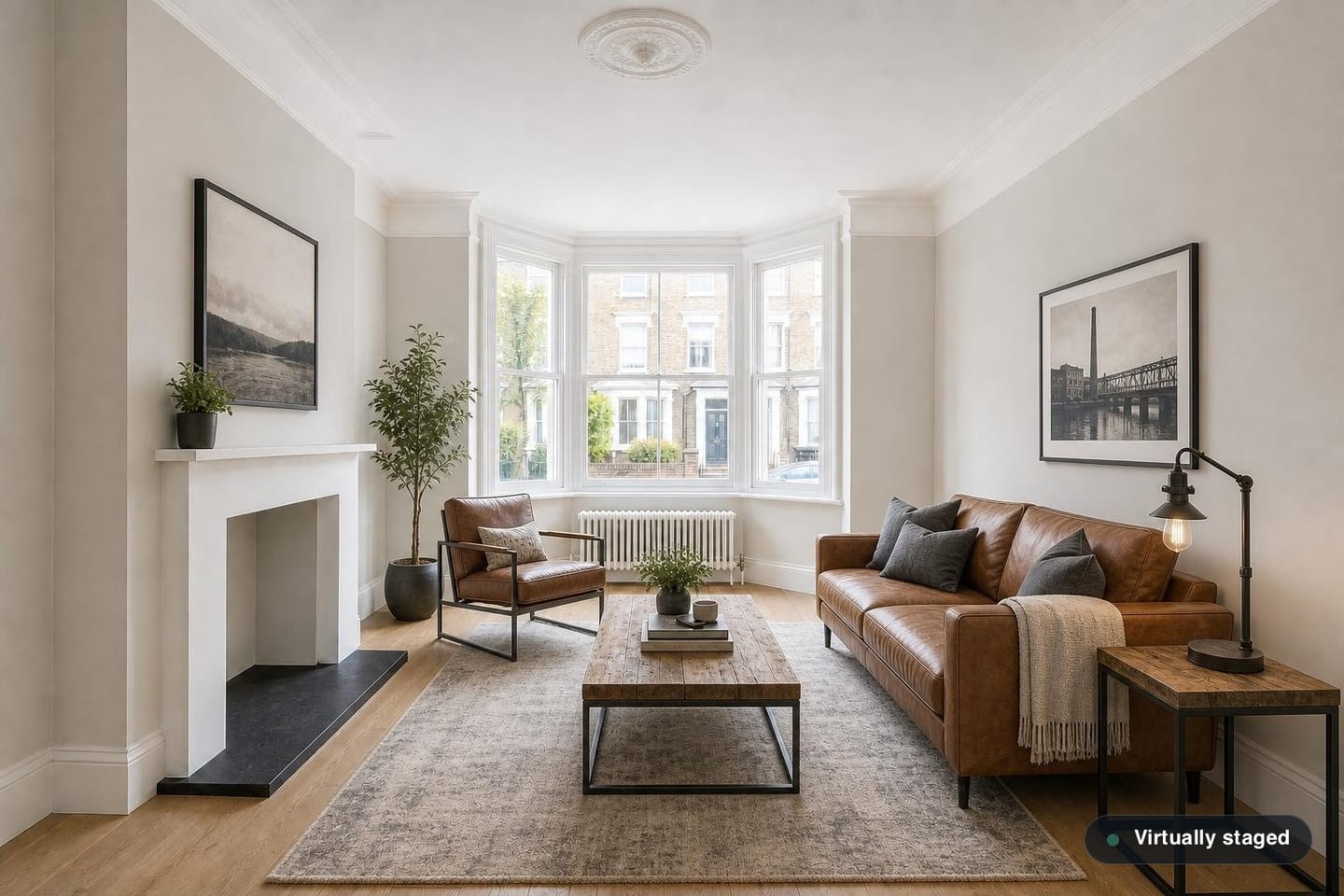
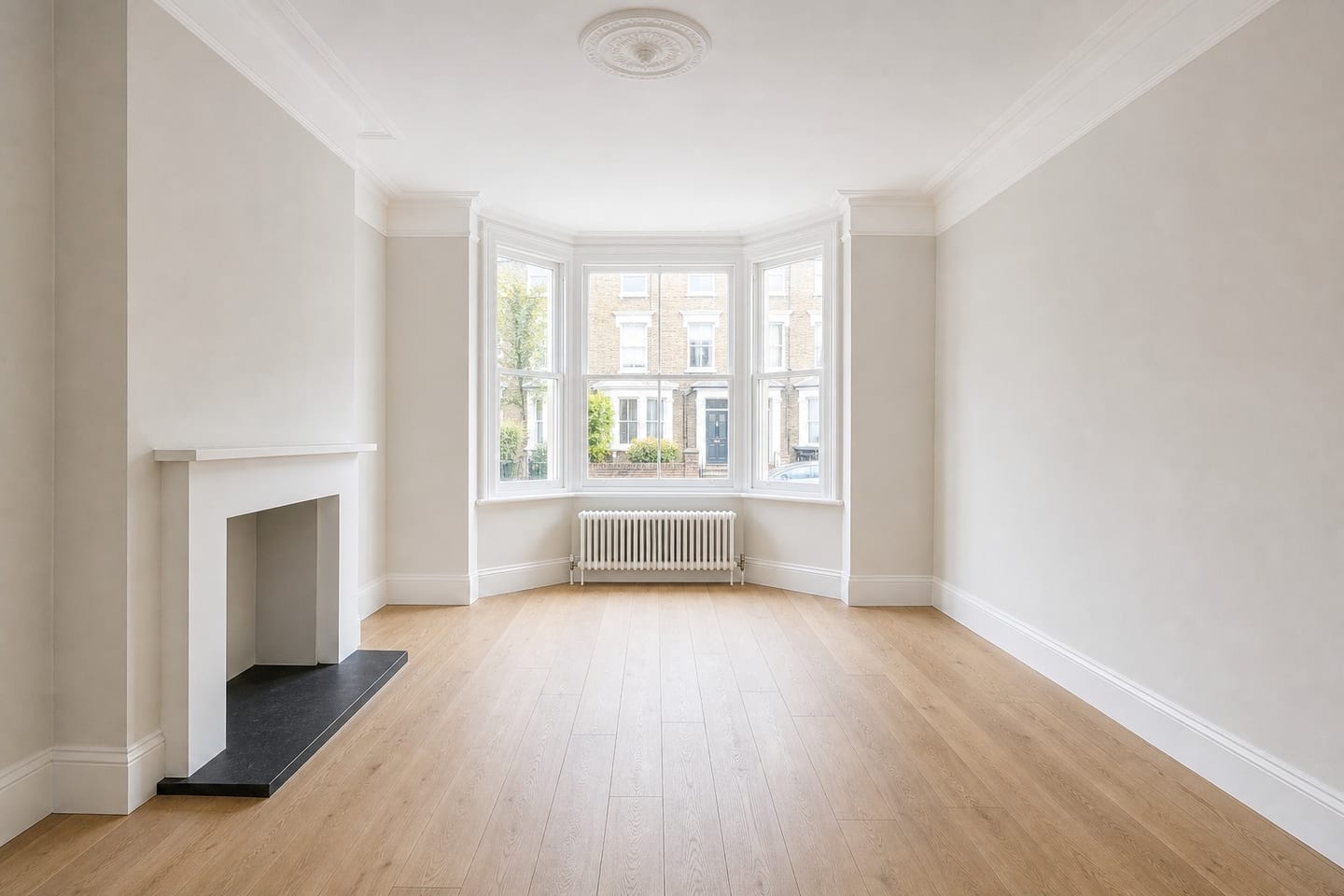 BeforeAfter
Furniture that agrees with the building
Tan and dark leather, black steel frames, reclaimed and rough-sawn timber, and a generally darker, heavier palette than anything else in the set. In a conversion with exposed brick, steel columns, concrete or full-height industrial glazing, this is the only style that looks like it belongs — everything else reads as domestic furniture that has wandered into a warehouse.
It also handles volume well. Big rooms with hard surfaces defeat light furniture, which disappears into the frame; substantial leather and steel hold their own.
Where it works
Warehouse and mill conversions, dockside and canal-side apartments, converted commercial buildings, and modern city flats with dark metal glazing and hard flooring. It suits a waterfront new-build with a lot of glass, where the frames and the furniture speak the same language.
It is a good option for a live-work unit or a loft where the buyer is explicitly not looking for a conventional home.
Where it falls flat
In ordinary domestic stock — a terrace, a semi, a standard flat — it looks like a themed room. In a bedroom it almost never works; the style wants volume and hard light, and British bedrooms have neither.
It is also the least family-friendly of the eight, and the worst choice for a listing aimed at a household buyer.
Which rooms to spend it on
The main living space of a conversion, where the building's own character — brick, steel, concrete, tall industrial glazing — gives the furniture something to agree with. In that room it is the only style of the eight that looks deliberate rather than applied.
In ordinary housing there is exactly one room it reliably suits: a converted garage or a basement, because those are the spaces in a normal house with genuinely hard surfaces and no domestic softness. A garage-conversion gym staged this way reads as intentional; the same room in Modern Farmhouse reads as confused.
Avoid it in bedrooms altogether, and avoid it on a family listing. It is the least broadly appealing style in the set, and using it outside its narrow range costs you buyers rather than differentiating you.
Industrial Loft questions
- Will it add exposed brick or steel beams to the room?
- No. Wall finishes and structure are architecture and cannot be added or altered. The style works only with free-standing furniture, which is exactly why it needs a building that already has the character.
- Can I use it in a normal flat to make it feel more urban?
- It generally backfires. Without hard surfaces or volume to justify it, the heavy furniture crowds the room and the scheme reads as costume. Mid-Century gives urban character with none of that risk.
- Does it suit a converted garage or basement?
- Often yes — those are the rooms in ordinary houses with genuinely hard surfaces. It is our usual pick for a garage-conversion gym.
Try it on a conversion
One free render on a warehouse, dockside or hard-surfaced room.
Stage a room freeThis page describes how the product works and how rooms photograph. It is not legal advice — for certainty about your own listings and disclosure, ask your compliance lead or solicitor.