Scandinavian
Scandinavian virtual staging
If you only learn one style well, learn this one. Scandinavian is the most reliable answer to the most common British staging problem: a room that is smaller and darker than the photograph flatters.
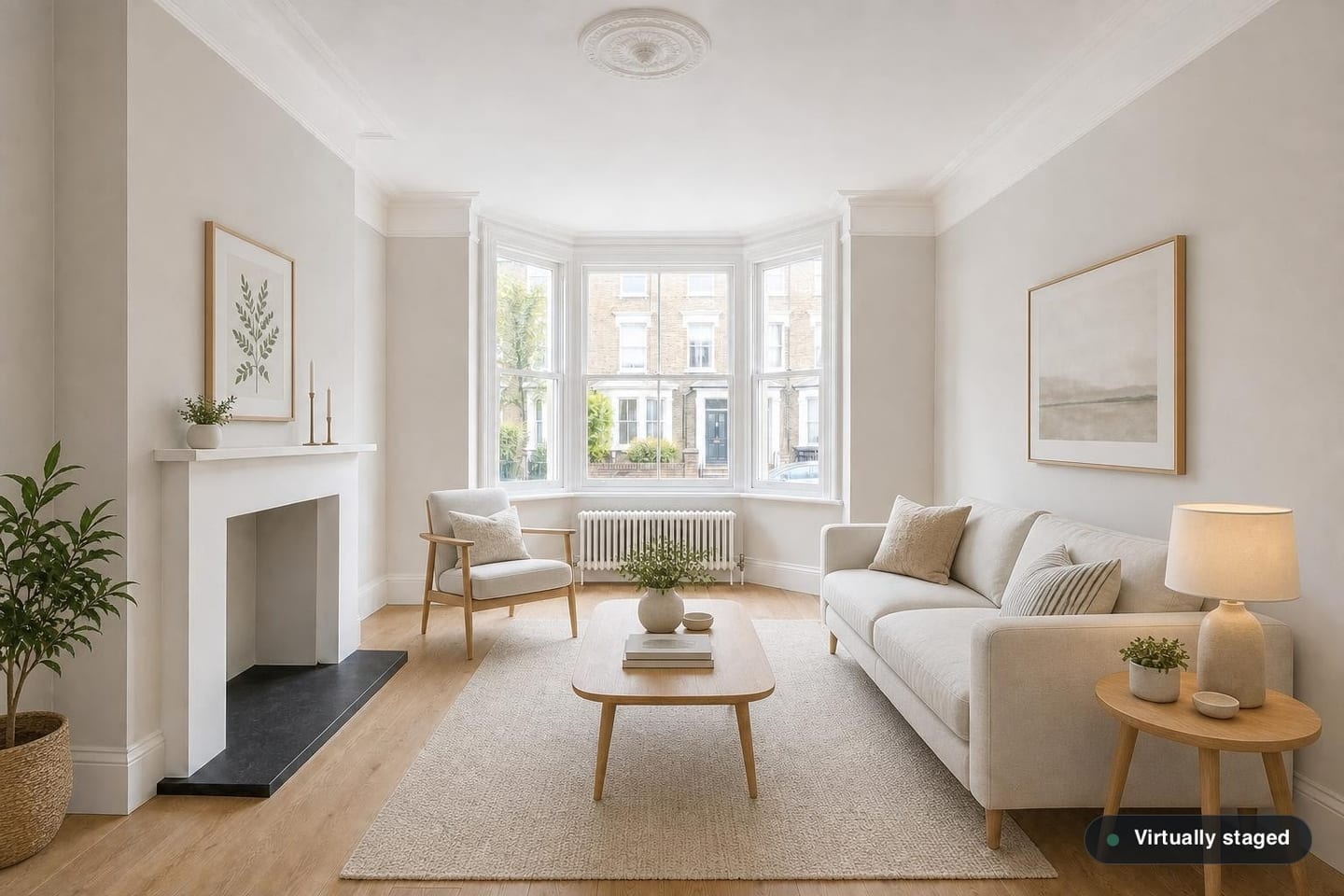
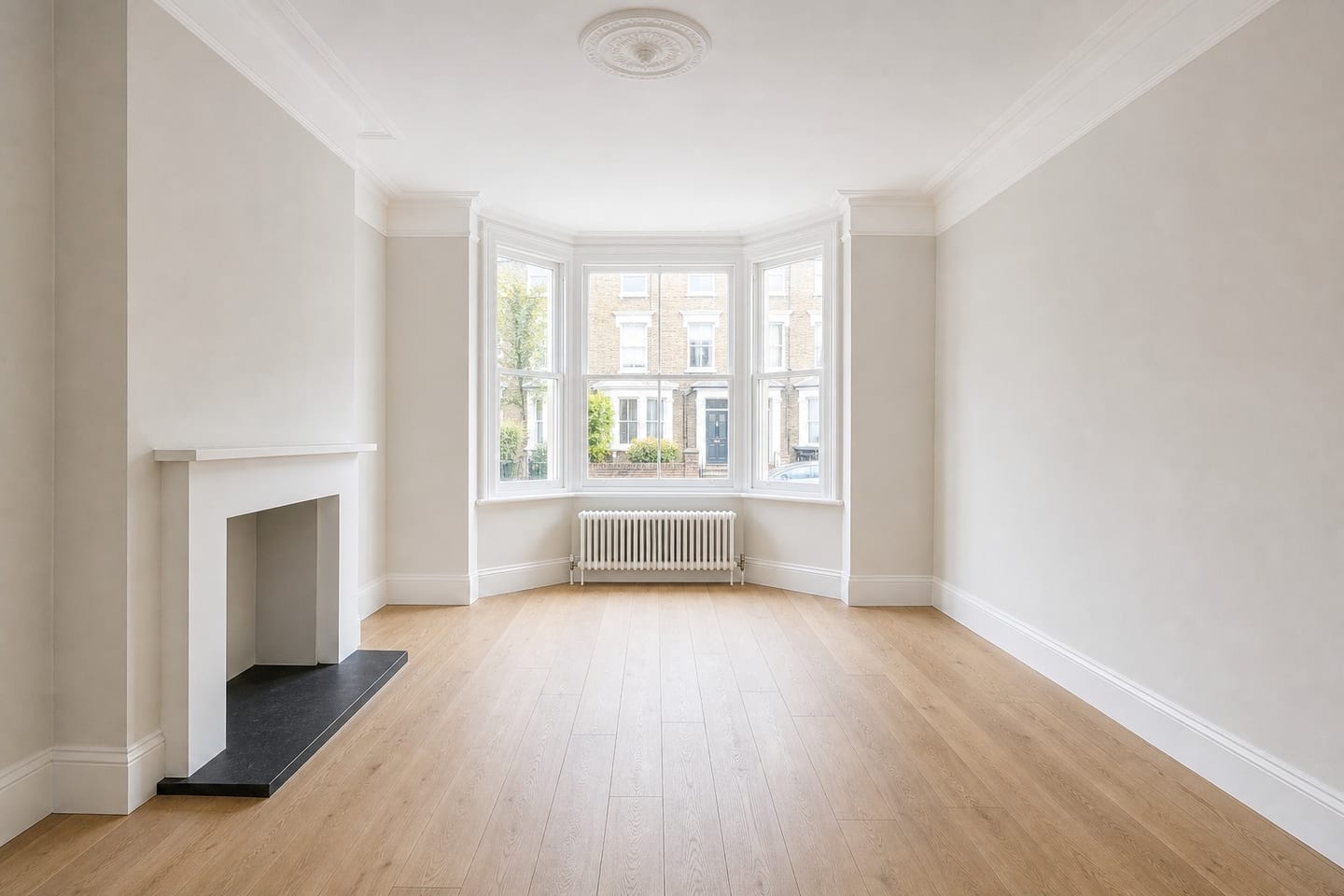 BeforeAfter
What it does for a room
Pale timber, white and oatmeal textiles, slim legs and low visual weight. The practical effect is that the furniture takes up less of the photograph than its footprint suggests — a light oak frame with a visible gap underneath reads as less bulky than a dark upholstered base of the same size, even though the floor area is identical.
That matters because most British rooms are competing against staging imagery shot in much larger spaces. In a 3.5 m reception or a 3 × 3.4 m double bedroom, the style that does not crowd is the style that makes the room look like itself.
Where it works
Tenement flats, terraced houses, north-facing rooms, box rooms, loft conversions and almost every rental listing. It is the default we would suggest for a first render on any property where the rooms are modest or the light is poor, and it is what the free room uses when nothing else is indicated.
It also travels well across a whole listing. Because it does not assert much, it does not fight a period feature in one room and then look out of place in a plain one, which is what makes it the safe choice for a mixed property.
Where it falls flat
In a genuinely grand room — a New Town drawing room, a double-height conversion, a high-value listing with real ceiling height — Scandinavian can read as underdressed, as though the room has been furnished with what was to hand. There, Classic Traditional or Luxury Contemporary do more work.
It is also the wrong choice when the listing needs to feel distinctive. In a market where several similar flats are on at once, eight pale rooms are forgettable; that is a case for Mid-Century or Japandi, which are nearly as safe and considerably more memorable.
Which rooms to spend it on
Across a listing, Scandinavian earns most in the rooms where light is scarce and space is tight: a north-facing reception, a small third bedroom, a box-room study, a narrow hall. Those are the photographs where a heavier scheme would visibly crowd the frame.
It is the safest choice for a whole-listing treatment precisely because it does not assert much. If you are staging four or five photographs of the same property and want them to read as one home rather than a set of separate pictures, this is the style least likely to fight any individual room.
The one thing it does not do is make a room look bigger than it is. Light furniture photographs less heavily, but the walls do not move — and if a render comes back looking roomier than the property, that is a structural failure to reject rather than a stylistic success.
Scandinavian questions
- Is Scandinavian the same as minimalist?
- Not quite. Minimalist staging tends to under-furnish, which leaves the buyer with the same scale problem as an empty room. Scandinavian furnishes properly — sofa, table, rug, art — but in materials and shapes that stay visually light.
- Will it make a dark room look brighter than it is?
- It should not. Lighting direction and exposure are kept as photographed; only the furniture changes. A pale sofa in a dark room reads lighter than a navy one would, but the room's actual light is the room's actual light.
- Does it suit period properties?
- It suits period flats and terraces well, especially tenements. In a formal reception room with deep cornicing and a marble chimneypiece it can look slightly casual — that is where Classic Traditional usually wins.
Try Scandinavian on your room
The safe default, free on one photo. Change the style once if it is not right.
Stage a room freeThis page describes how the product works and how rooms photograph. It is not legal advice — for certainty about your own listings and disclosure, ask your compliance lead or solicitor.