Bedrooms
Staging an empty bedroom
Bedrooms are where staging is most useful and most dangerous at once. Useful, because a bed answers the buyer's actual question. Dangerous, because the answer has to be true.
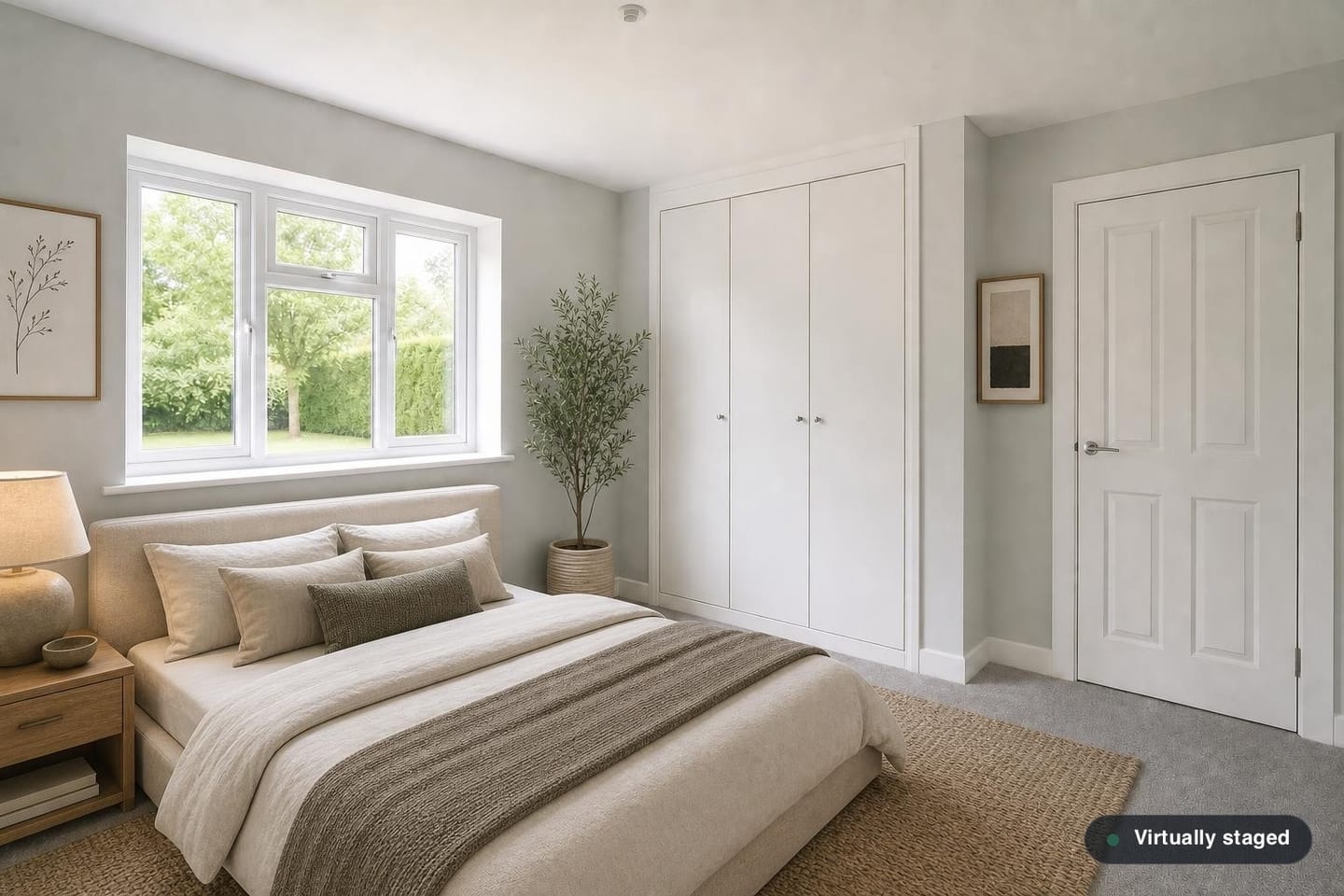
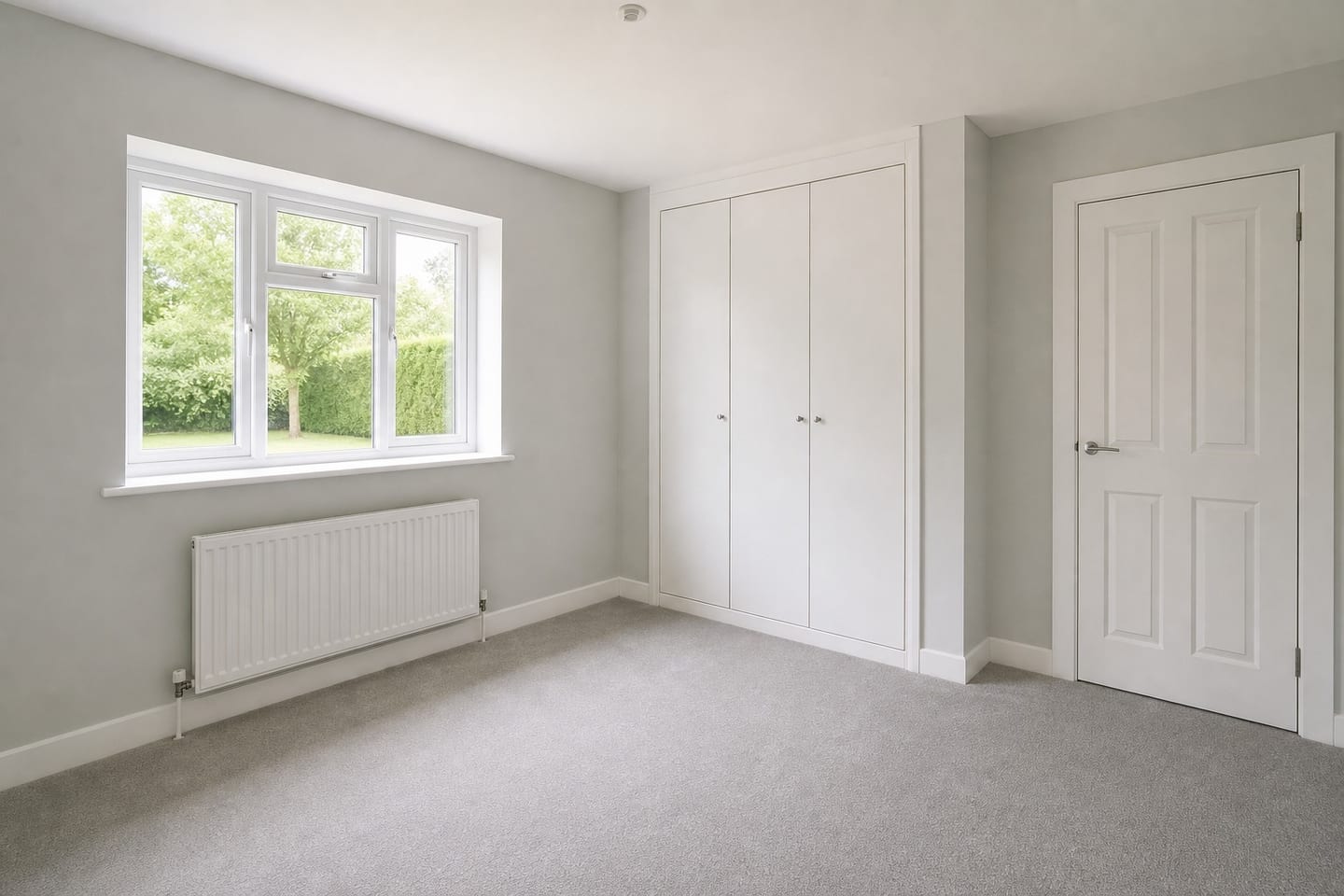 BeforeAfter
The buyer is asking one question
Standing in front of an empty bedroom photograph, a buyer is working out what size bed fits and whether there is room to get past it. Everything else — the wardrobe, the lamp, the art — is decoration around that question. A staged bedroom that shows a double with a walkway on both sides has told the buyer something specific and useful.
This is exactly why the bed shown has to be the bed that fits. A UK double is 135 × 190 cm and a king is 150 × 200 cm; the difference is enough to make a room look generous or tight. Showing a king in a room that takes a double is not a styling flourish, it is a claim about the property.
Box rooms and third bedrooms
The small third bedroom is the most common problem room in British housing, and it is where staging earns the most. Empty, it is genuinely unreadable — the buyer cannot tell a single bedroom from a study from an over-stair cupboard, and will usually assume the least generous reading.
It is also the room where the widening failure shows up most. A room under about 7 m² will not hold a bed, two nightstands, a rug and a chair, and an instruction that demands all of them forces the model to make the room bigger to fit them. The furniture list for a bedroom is therefore written to name the bed as the anchor and offer everything else subject to fit, and "omit anything the room cannot hold at its real size" is in the instruction verbatim.
One boundary worth stating plainly: staging a small room with a bed does not make it a bedroom. The marketed room count and the room descriptions come from the particulars and the floor plan, not from the photograph, and a staged box room should not be used to support a bedroom count the measurements do not.
Loft conversions and sloped ceilings
Converted loft bedrooms have restricted head height over part of the floor, and furniture has to sit under the slope the way it really would — a bed pushed to the low side, a wardrobe on the full-height wall. Staging that ignores the slope produces a photograph that a viewing immediately contradicts, which is worse than no staging at all.
Dormers, rooflights and eaves storage doors are all architecture and stay exactly as shot.
Styles that suit bedrooms
Japandi and Scandinavian are the two that consistently work: low, light furniture that does not crowd a modest room, and neutral textiles that photograph well in the soft light most bedrooms get. Classic Traditional suits a period principal bedroom with a fireplace. Industrial Loft almost never suits a bedroom in British stock — it wants volume the room does not have.
Bedroom questions
- Can it show a double bed in a room that only fits a single?
- It should not, and if it does you should reject the render. The instruction asks for furniture at true scale and for anything that does not fit to be omitted, but the check is yours: compare against the floor plan and the stated dimensions before you publish, especially where bedroom classification matters.
- Will it remove the built-in wardrobe?
- No. Built-in wardrobes are fitted units and count as architecture, so they stay exactly as photographed, doors closed. Only free-standing furniture is added.
- Is staging a box room misleading?
- Not in itself — showing one plausible use of an awkward room is genuinely helpful. It becomes a problem if the staged photo is used to imply a bedroom count or a room size the particulars do not support. Stage it, disclose it, and let the measurements do the classifying.
- The render made the room look wider than it is. What now?
- Reject it and re-render. That is a structural failure rather than a taste one, and it is the specific thing to look for when you compare the render against your original. If it keeps happening on the same photo, tell us — a render that fails the same way twice is usually a prompt problem, not bad luck.
Stage your hardest bedroom first
The box room is the photo with the most to gain. One free render, original included.
Stage a room freeThis page describes how the product works and how rooms photograph. It is not legal advice — for certainty about room descriptions, bedroom counts and disclosure, ask your compliance lead or solicitor.