Children's rooms
Staging a child's room
Staging a small bedroom as a child's room does something the same room staged as an adult double cannot: it makes the size read as appropriate rather than apologetic.
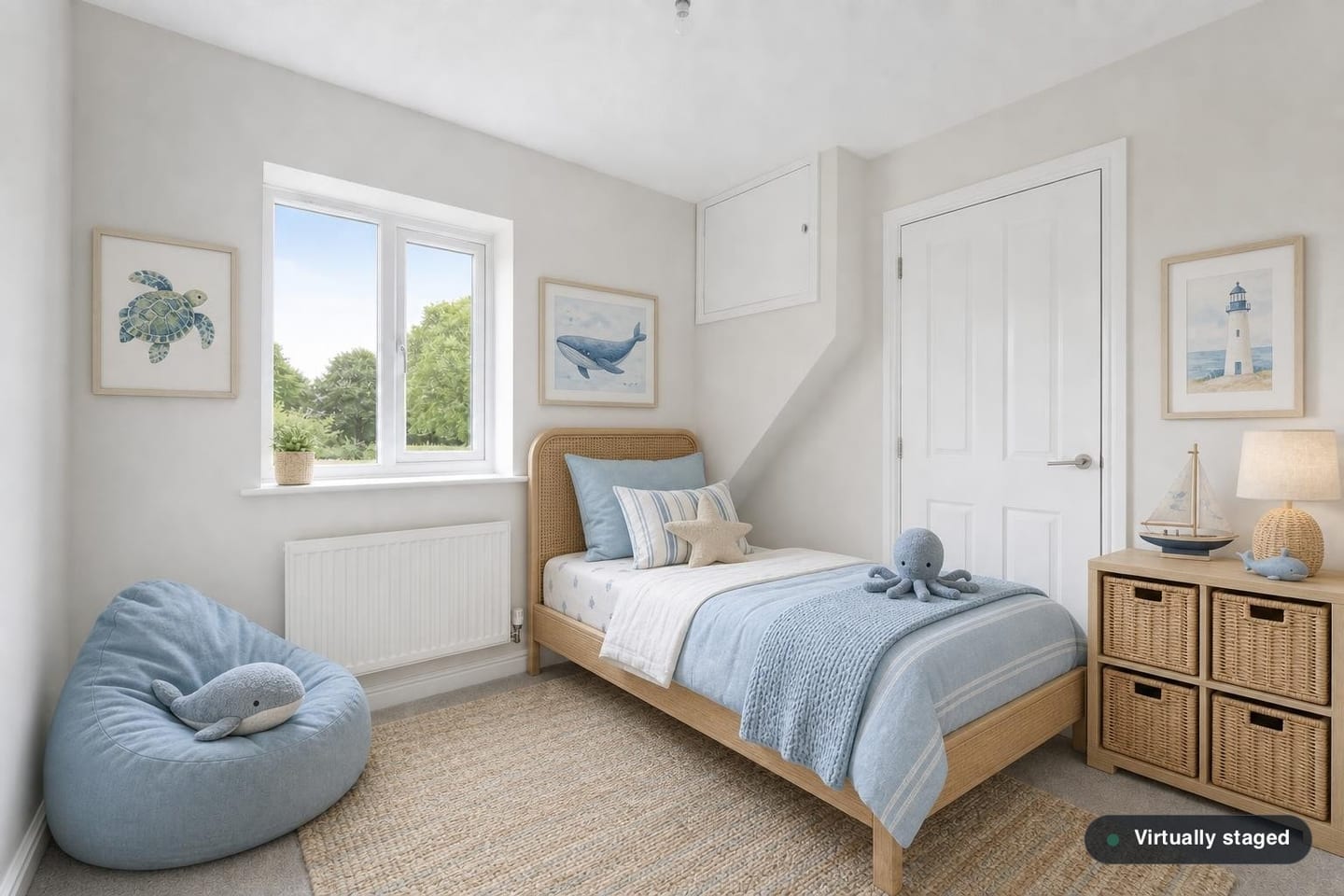
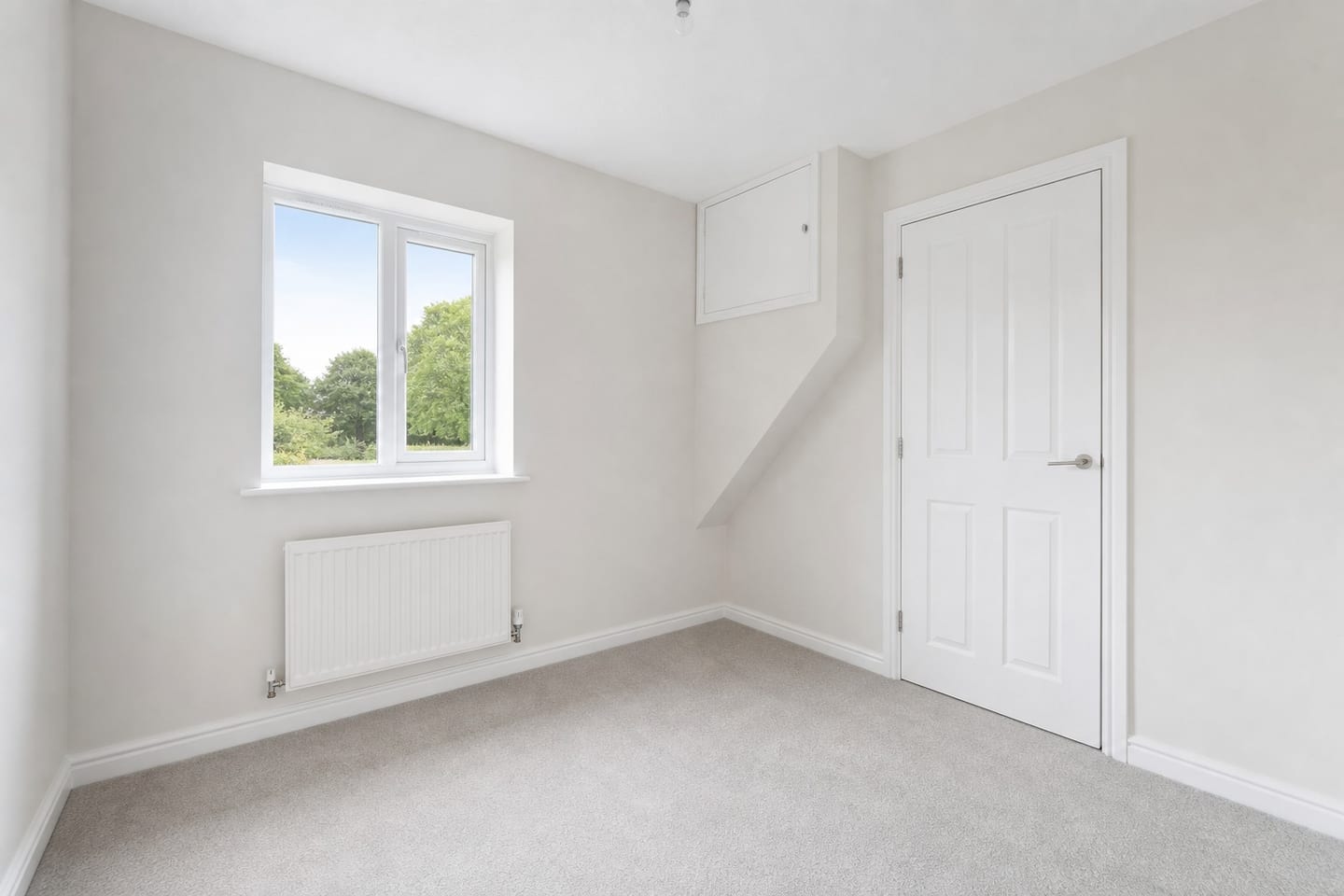 BeforeAfter
Framing a small room as the right room
A 7–9 m² bedroom photographed with a double bed looks cramped. The same room with a single bed, a small dresser and a soft rug looks like exactly what a family buyer is looking for. Nothing about the room changed — only the reading of it — and that is a legitimate and useful thing for a staged photograph to do.
This matters most in the family-home segment, where the buyer is running an explicit calculation about how many children fit and in which rooms. A listing where the second and third bedrooms are staged for their plausible occupants answers that calculation directly.
What goes in, at what scale
A child's bed with linens is the anchor — or a cot where the room is being read as a nursery. Beyond that: a small dresser or toy storage, a soft rug, a reading chair or beanbag, and playful wall art, each only where the room genuinely holds it. A nursery reads well with a cot, a small chest used as a changing surface and a chair; adding all three plus a wardrobe plus a rug to a 7 m² room is how the room ends up wider than it is.
Keep the decor generic. Named characters, licensed prints and anything with readable text on the wall are unnecessary and add a rights question to a marketing image for no benefit.
Shared rooms, and the bunk-bed question
A recurring question in family listings is whether to stage a second bedroom as a shared room, usually with bunks. It is a fair photograph when the room genuinely takes them — bunk beds have a real footprint, need head clearance on the top bunk, and want space to get in and out — and it answers a question a family buyer is definitely asking.
It stops being fair when it is doing work the room cannot support. A room that takes one single bed comfortably does not become a two-child room because the staged photograph shows bunks, and a listing that implies otherwise sets up a viewing that goes badly. The same rule applies here as everywhere: the measurements and the floor plan classify the room, and the photograph illustrates one plausible use of it.
Where a room is genuinely marginal, staging it for one child is the stronger choice. It reads as confident rather than as stretching, and a buyer who arrives and realises two would fit is a buyer who has had a pleasant surprise rather than a disappointing one.
The features that stay
Radiators, window restrictors, the sill, the door, the flooring, and any over-stair bulkhead or eaves cupboard stay exactly as photographed. If the room has a low ceiling on one side, furniture sits under it the way it really would.
Window restrictors are worth calling out specifically. They are a safety fitting, they are often visible in a child's-room photograph, and they must not be edited away to tidy the frame — a buyer with small children may well be looking for them.
As in every room, the badged render and the untouched original are delivered together, and comparing them is the check.
Children's room questions
- Does staging a room for a child understate its size?
- It frames it rather than understates it — the room's dimensions are in the particulars and the floor plan either way. If the room genuinely takes a double, and that matters to the listing, stage it as a double instead.
- Can it stage a nursery?
- Yes — choose the children's room type and the render will read as a nursery if the room suits it, with a cot rather than a bed. It is a good option for a small room in a family home.
- Should the decor be gender-neutral?
- Generally yes. A buyer is imagining their own child in the room, and strongly themed decor narrows that. Neutral colour with one or two playful pieces does the job without deciding for them.
- Will it add a bunk bed to show two children fit?
- It should not be used to imply an occupancy the room does not support. If a bunk genuinely fits, that is a fair photograph; using one to suggest a small room sleeps two when it realistically does not is the kind of claim that causes problems at a viewing.
See how the second bedroom reads
Stage one room free and compare the framing against the empty original.
Stage a room freeThis page describes how the product works and how rooms photograph. It is not legal advice — for certainty about room descriptions, occupancy and disclosure, ask your compliance lead or solicitor.