Living rooms
Staging an empty living room
The living room is usually the lead photograph, and it is the room that loses the most by being empty: with nothing in it, a buyer has no reference for how big it is and no idea how they would arrange it.
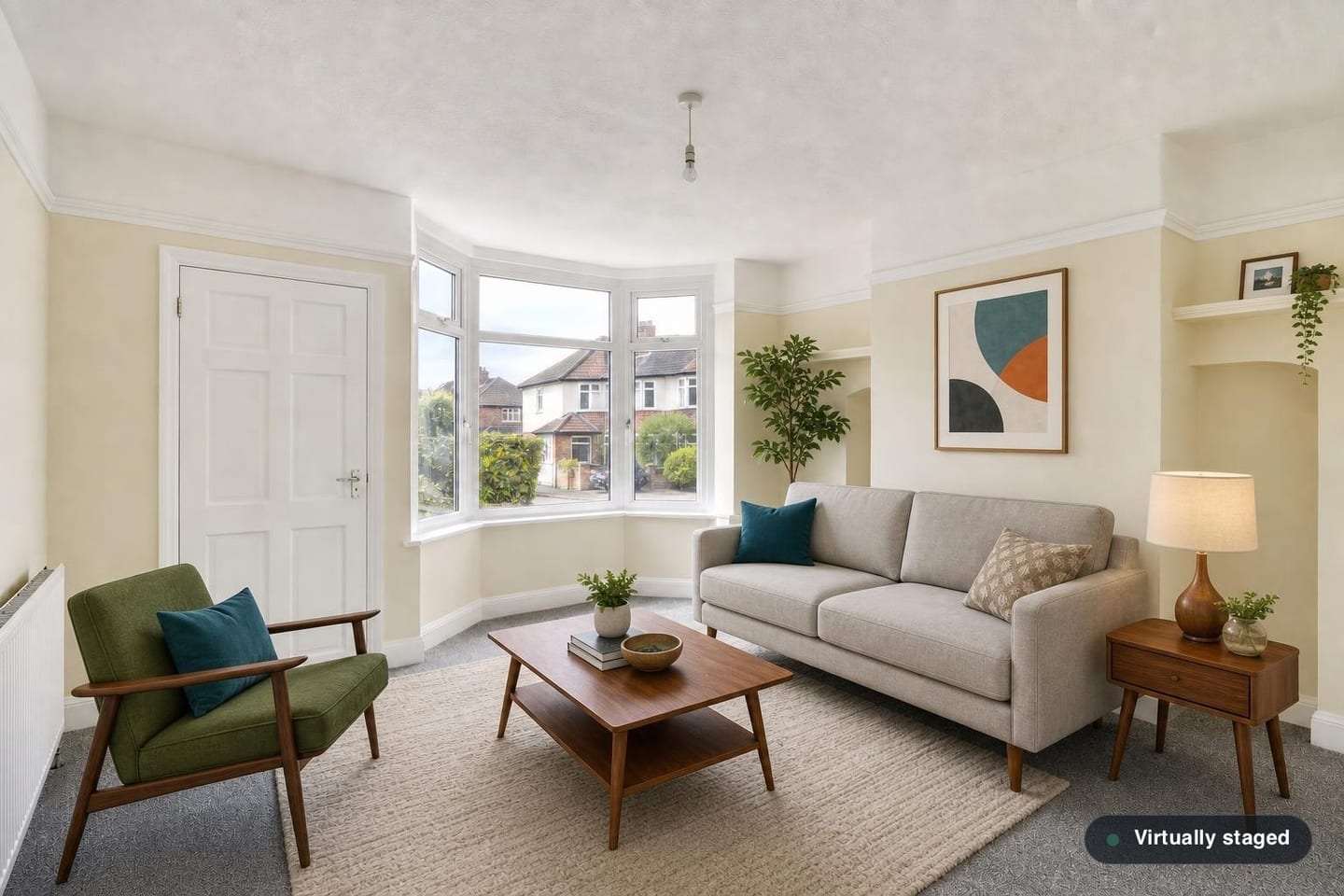
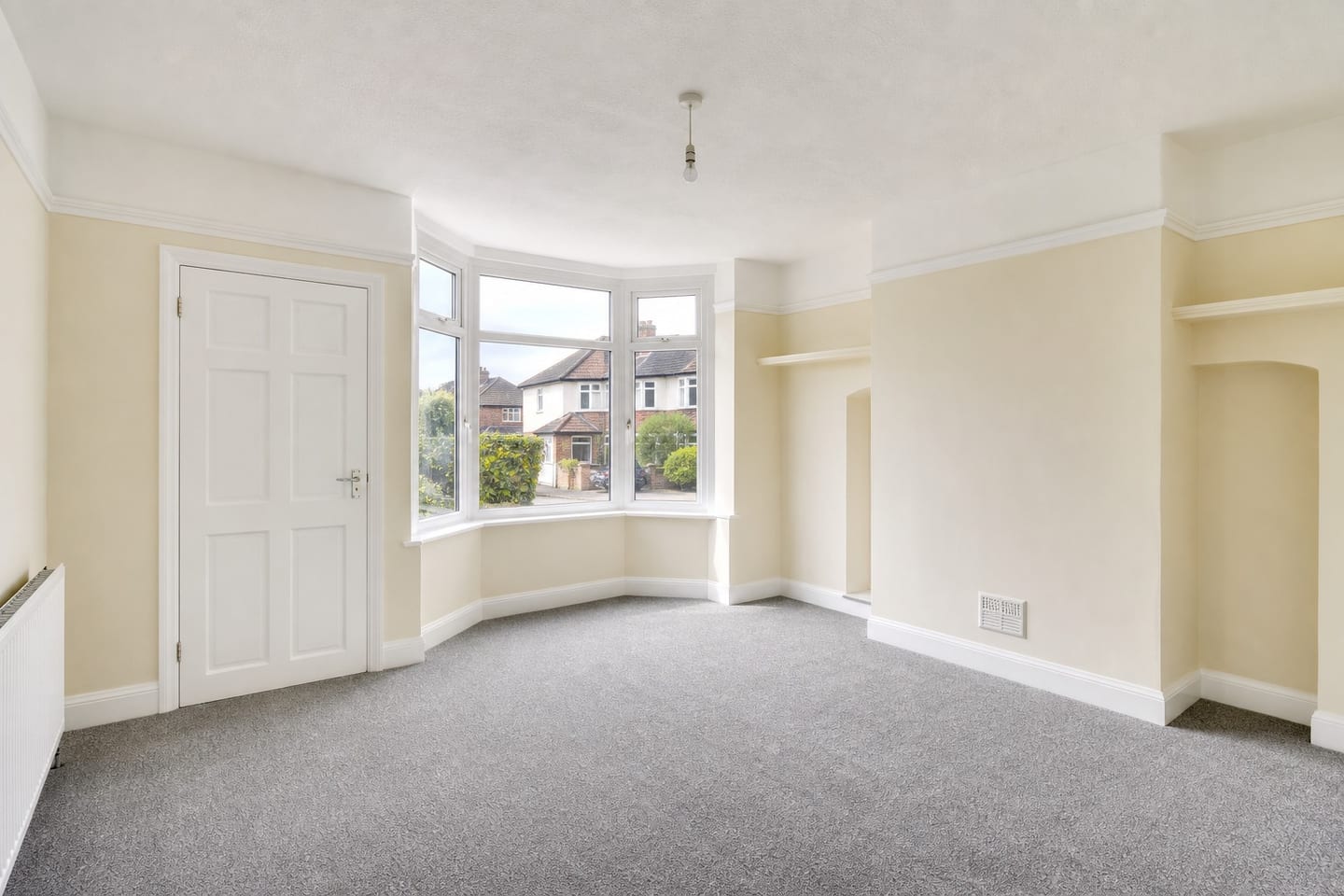 BeforeAfter
The job is scale, then arrangement
An empty reception room gives the eye nothing to measure against. Skirting boards and a radiator are poor references; a sofa is an excellent one, because everybody knows roughly how long a three-seater is. That is most of the value in staging a living room — not making it pretty, but making it legible.
The second thing a staged living room does is answer the arrangement question. British reception rooms frequently have a chimney breast with alcoves either side, a bay at one end and a door in an awkward corner, which leaves fewer workable layouts than the floor area suggests. Showing one plausible arrangement saves the buyer from concluding there isn't one.
What fits, honestly
A through-lounge in a Victorian terrace will take a three-seater, an armchair, a coffee table and a 160 × 230 rug without crowding. A 3.5 × 4 m reception in a 1930s semi takes the same set but the rug wants to be smaller. A knocked-through living-dining space needs the two zones to read separately, or the photograph makes the whole room look like a furniture showroom.
Where the room genuinely will not hold the full set, the furniture is what gets dropped — not the wall that gets moved. If a render comes back with a room that looks roomier than you remember, reject it and re-roll: that is the failure mode worth being alert to, and it is why the untouched original is delivered next to every render.
Styles that suit British reception rooms
Mid-Century sits well in interwar and post-war stock — walnut and tapered legs are period-sympathetic without being costume. Classic Traditional is the safer choice where there is real plasterwork and a chimneypiece to respect. Scandinavian is the reliable answer in a small or north-facing room, because pale timber and light textiles stop the furniture eating the available light.
Luxury Contemporary works in a high-ceilinged room with generous proportions and looks oversized in a standard terraced lounge. That is the usual mistake: choosing the style you like rather than the one the room can carry.
What must not change
The chimney breast, the alcoves, the bay, the cornice, the sash or casement frames, the radiator, the sockets, the flooring and the view onto the street are all part of the property, and none of them may be altered, removed or invented. A rug may cover part of the floor and a sofa may sit in front of a radiator — occlusion is fine. A fireplace that gains a surround it did not have is not.
Living room questions
- Will it remove the chimney breast to make the room look squarer?
- It must not. Chimney breasts and alcoves are structural features that buyers use to judge layout, and altering one changes what the property is. Compare the render against your original before publishing — that comparison is the only check that runs.
- Can it stage a knocked-through living-dining room?
- Yes. Choose the living room type and the render will furnish the whole space, usually reading as a seating zone and a table zone. If the dining end matters more to the listing, stage the same photo as a dining room instead and compare the two.
- My living room has patterned carpet. Can it be changed?
- No. Flooring is a property feature, not decor, so a carpet cannot be recoloured or replaced with boards. An area rug can be laid over part of it, which is usually what people are actually asking for.
- How many living-room photos should I stage?
- One, in most listings. Two angles of the same staged room can be worth it in a large or unusually shaped reception, but a gallery where every photo is staged reads as a brochure rather than a property.
Try it on your own reception room
Upload one empty living-room photo and pick a style. No card, and the original comes back with it.
Stage a room freeThis page describes how the product works and how rooms photograph. It is not legal advice — for certainty about your own listings and disclosure, ask your compliance lead or solicitor.