Dining rooms
Staging an empty dining room
A dining room is the room a buyer is most likely to mentally repurpose, which makes the staged photograph a suggestion rather than an instruction — and makes the seat count the thing to get right.
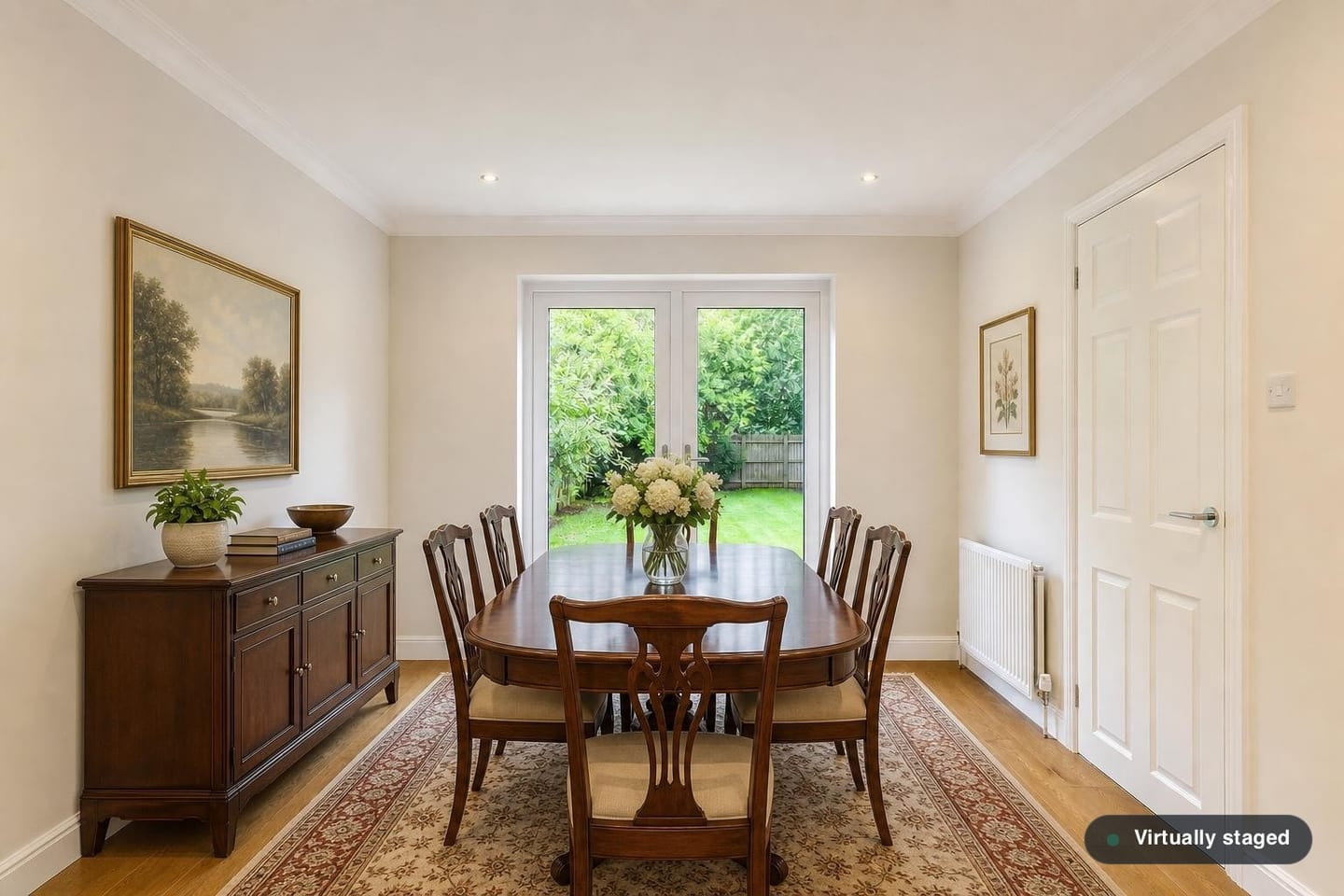
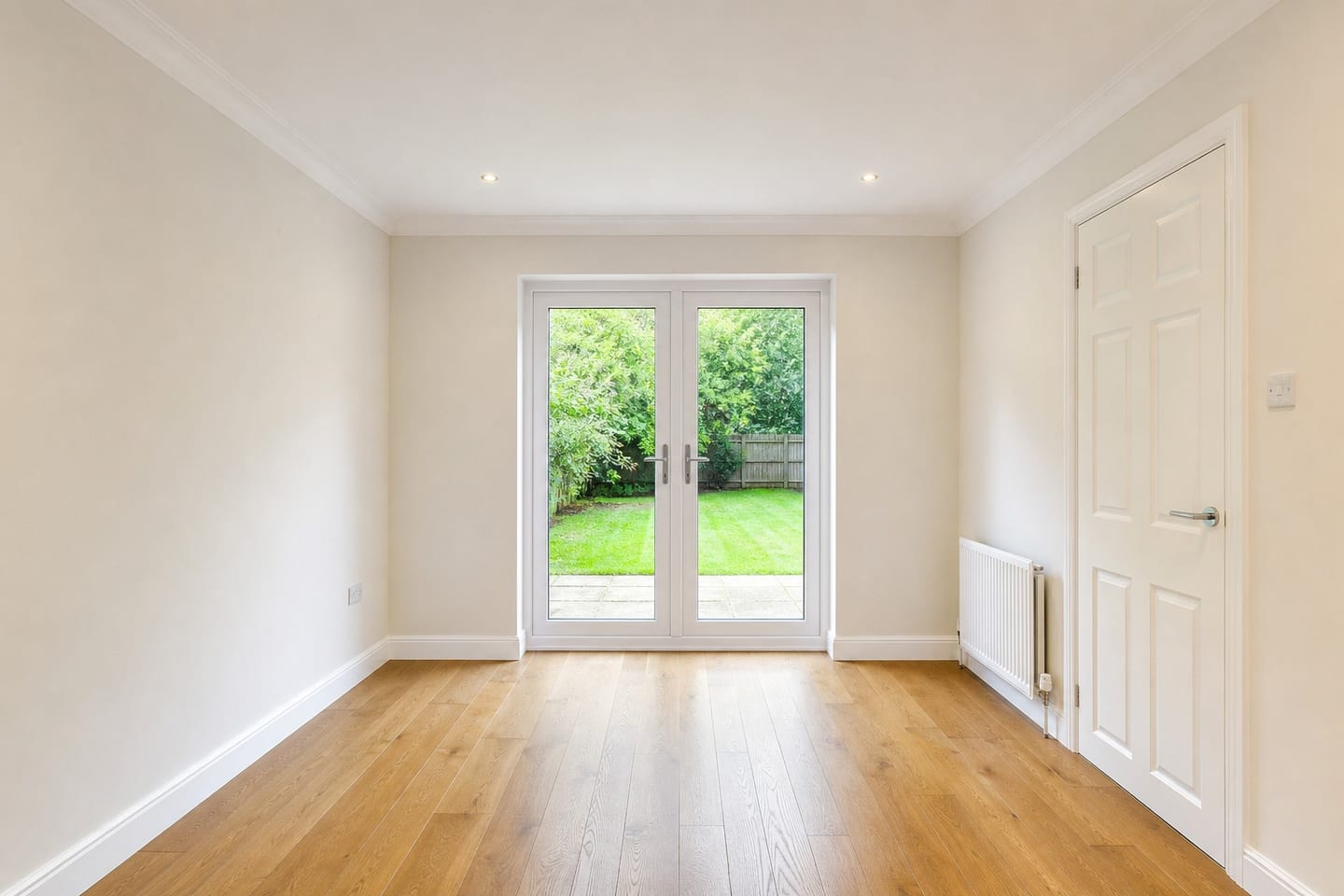 BeforeAfter
The table is a measurement
A dining table is the most quantitative piece of furniture in a listing. A six-seater is about 180 cm long and needs roughly 90–100 cm of clearance behind each chair to be usable, which means a genuine six-seater dining room is around 3.4 m across at minimum. Show a ten-seater in a room that takes six and you have made a specific claim about the property that a tape measure disproves.
So the useful staging decision in this room is the seat count, not the finish. Choosing a four-seater for a modest middle room is more persuasive than choosing an eight-seater, because a buyer who has been in a few houses can tell which one is real.
The three dining rooms in British housing
The separate dining room in a Victorian or Edwardian terrace is often the middle room, with a chimney breast and limited light, and it stages well because empty it looks like a corridor with a fireplace. The dining end of a knocked-through living-dining space needs to read as its own zone or the whole room looks undefined. The dining area in an open-plan kitchen-diner extension is usually the easiest, because the space is generous and the light is good.
The fourth case is the one to be careful with: a room currently used as a dining room that most buyers will use as a fourth bedroom or a study. Staging it as a dining room is legitimate, but if the particulars describe it as a bedroom, stage it as one.
What is added, and what is not
A table and a matching set of chairs is the anchor. A sideboard, a rug under the table, a centrepiece and a little wall art follow only where there is genuine room for them — a rug that runs under a table needs about 60 cm beyond the table edge on every side to work, and in a tight room it is the first thing to drop.
Fireplaces, French doors, serving hatches, picture rails, radiators and flooring stay exactly as shot. If the room has a bay or an alcove, the furniture works around it rather than the render tidying it away.
Dining room questions
- How many seats should the staged table have?
- The number the room genuinely takes with chairs pulled out. If you are unsure, go one lower — an under-claimed dining room costs you nothing at a viewing, and an over-claimed one costs you credibility.
- Can I stage the same room as both a dining room and a bedroom?
- You can render it both ways and choose, but publish one. Two staged versions of the same room in one gallery reads as indecision, and it invites the question of which one is the honest description.
- Will it remove the serving hatch?
- No. A hatch is a feature of the wall, so it stays. Furniture may be placed in front of it, but the hatch itself cannot be filled in.
- Does the dining room need staging if the kitchen is already staged?
- Usually yes, and in the other order: if you are only staging one, the room that reads worst empty wins, and an empty separate dining room reads considerably worse than an empty fitted kitchen.
Try it on the middle room
The room that photographs worst empty is the one with most to gain. One free render.
Stage a room freeThis page describes how the product works and how rooms photograph. It is not legal advice — for certainty about room descriptions and disclosure, ask your compliance lead or solicitor.